September 14, 2026
Energy Market, important, INTERVIEWS, Media
Iran is shifting trade toward northern ports and land routes as its southern shipping faces a US blockade. Analysts say the corridors can keep essential goods moving, but cannot replace maritime trade. Can land corridors offset the impact of the maritime blockade on Iran? The US-led maritime blockade targeting Iranian ports …
Read More »
September 13, 2026
ARTICLES, Energy Market, important
Oil markets are behaving as if the region’s supply problems will soon resolve themselves. That confidence is becoming increasingly difficult to justify.By mid-September 2026, futures prices had repeatedly eased or paused on the basis of limited diplomatic signals, even as three major vulnerabilities were developing at the same time: Iran’s …
Read More »
September 8, 2026
ARTICLES, Energy Market, important
The Kingdom Can Withstand the Current Pressure Caused by the Iran War, but Only If It Defines Its Priorities Because of the Iran war, Saudi Arabia has fewer barrels of oil to sell but receives more money for every barrel it does sell. Attacks on energy facilities and the Strait …
Read More »
September 7, 2026
ARTICLES, Energy Market, important
US attacks on Iranian oil tankers could make it far harder and more expensive for Tehran to keep selling its crude, but the strategy carries a potentially much larger cost: turning the Persian Gulf’s energy infrastructure into an expanding battlefield. The latest US strikes on three Iranian oil tankers mark …
Read More »
September 5, 2026
ARTICLES, Energy Market, important
President Donald Trump’s endorsement of Syria as a possible alternative to the Strait of Hormuz has pushed an old energy-security problem back to the center of Middle Eastern strategy. On September 3, Trump reacted positively to a Washington Post report describing Syria’s effort to market itself as an overland corridor from …
Read More »
September 2, 2026
ARTICLES, Energy Market, important
The Eastern Mediterranean’s importance is often measured by its gas discoveries, but reserves acquire strategic value only when they can reach consumers. Egypt’s Zohr, Israel’s Tamar and Leviathan, and Cyprus’s Aphrodite, Glaucus and Cronos have given the basin a substantial resource base. Yet Egypt occupies the pivotal position because its Idku …
Read More »
August 30, 2026
ARTICLES, Energy Market, important
Iran’s large-scale fuel losses appear to go beyond the smuggling cited by officials in Tehran, with evidence pointing to organized diversion within the country’s fuel distribution system. Iranian officials repeatedly say around 20 million liters of fuel are smuggled out of the country every day, costing Iran between $4 billion …
Read More »
August 27, 2026
important, INTERVIEWS, Media
With President Donald Trump threatening to launch an “economic D-Day” against Iran, one of the Islamic Republic’s most important wartime lifelines is its geography. And while the resumption of a U.S. naval blockade last month has substantially limited Iran’s maritime trade, land routes are becoming an increasingly vital source of commerce. Located at …
Read More »
August 26, 2026
ARTICLES, Energy Market, important
The 2025-2026 Iran-Israel-U.S. conflict marked a turning point in global energy politics. Direct attacks on Iranian energy infrastructure, such as South Pars and the Kharg Island export terminal, along with Iranian threats to disrupt the Strait of Hormuz, revealed the weakness of maritime chokepoints. About 20% of the world’s seaborne …
Read More »
August 26, 2026
ARTICLES, Energy Market, Featured, important
Enforcement Will Test Abu Dhabi’s Appetite to Absorb Domestic Costs While Pressuring Tehran On August 19, 2026, the United Arab Emirates announced it had stopped “all trade, commercial exchanges and financial transactions” with Iran “until further notice.” But the Foreign Ministry did not cite a new statute, cabinet resolution, sanctions list or …
Read More »


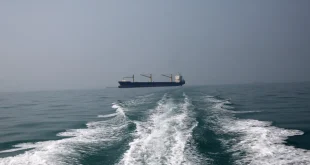


![Commercial vessels and oil tankers preparing to transit through the Strait of Hormuz, one of the most critical strategic waterways for global trade flows, maintain their wait in the Gulf of Oman, on June 17, 2026. [Shady Alassar – Anadolu Agency]](https://uskenergy.com/wp-content/uploads/2026/09/Hormu-310x165.webp)
![Turkish President Recep Tayyip Erdogan (5th L), Saudi Crown Prince Mohammed bin Salman (C) and Pakistani Prime Minister Shehbaz Sharif (5th R) pose for a family photo after signing a trilateral joint defense agreement in Mecca, Saudi Arabia, on August 7, 2026. [TUR Presidency /Murat Cetinmuhurdar – Anadolu Agency]](https://uskenergy.com/wp-content/uploads/2026/09/Mecca-Pact-310x165.webp)