Restarting Production Requires More than Reopening Valves, Likely Taking Weeks Rather than Days
Iraq’s claim that it can restore oil production and exports within seven days of a Strait of Hormuz reopening may reassure markets, but the process would not be simple. Iraqi officials, including Deputy Oil Minister Basim Mohammed and Basra Oil Company representatives, have repeated this timeline during the crisis linked to the U.S.-Israel conflict with Iran. Their confidence rests on Iraq’s southern fields, which normally send about 3.4 million barrels per day through Basra’s export terminals.
Still, the seven-day target faces major obstacles. Iraq sends about 93 percent of its crude exports through Basra and the Strait of Hormuz, leaving few backup routes. When tanker traffic stopped, storage filled quickly and Iraq had to cut production sharply. National output fell below 1.3 million barrels per day, while southern production reportedly dropped by about 80 percent to 800,000 to 900,000 barrels per day.
When tanker traffic stopped, storage filled quickly and Iraq had to cut production sharply.
Restarting production requires more than reopening valves. Major fields such as Rumaila fell from about 1.35 million barrels per day to nearly 400,000 barrels per day, while Zubair and other fields also cut output sharply. Operators used the shutdown period for maintenance, but extended low-output conditions can complicate reservoir management, affect well integrity, and require gradual pressure stabilization. Analysts note that restarting shut-in wells, especially in complex supergiant fields, can take careful sequencing and may require weeks rather than days.
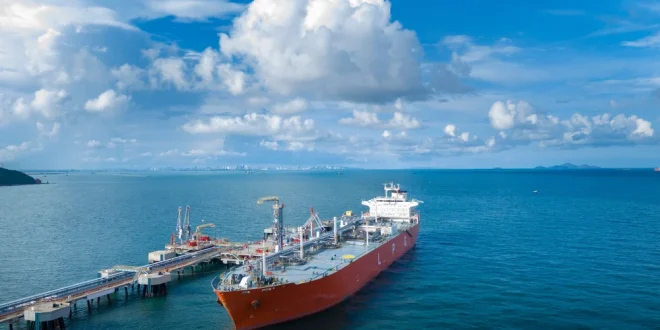
Basra’s export system creates another constraint. It includes the Basra Oil Terminal and offshore single-point moorings, with theoretical capacity of about 3.3–3.5 million barrels per day. In practice, aging subsea pipelines, pumping limits, and the long-idle Khor Al-Amaya terminal reduce effective throughput. Recent compressor additions have helped, but key bottlenecks remain.
Once the Strait reopens, terminals must manage a sudden increase in tanker nominations. Iraq’s State Organization for the Marketing of Oil has previously asked customers to submit lifting schedules quickly during periods of calm, which signals readiness at the official level. Actual loading, however, depends on berthing capacity, pilotage, tanker coordination, and congestion around export facilities. Iraq’s limited storage buffers, which filled rapidly during the crisis, leave little room for delay. Any slowdown in loadings could keep production below normal levels.
Northern routes offer only limited support. Exports through the Iraq-Turkey Pipeline to Ceyhan have recently remained modest, at around 170,000–200,000+ barrels per day. Political disputes between Baghdad and Erbil, underinvestment in south-north pipeline links, and recurring security incidents continue to restrict this route. These volumes cannot quickly offset delays in southern exports.
Crew availability, war-risk premiums, and confirmation of safe passage could all delay a full return to normal operations.
Security risks also may slow recovery. Drone strikes hit facilities in Basra and Kurdistan during the conflict, targeting foreign-operated sites and causing fires and operational disruptions. Insurance markets tightened, and tanker operators may remain cautious even after the Strait formally reopens. Crew availability, war-risk premiums, and confirmation of safe passage could all delay a full return to normal operations. Iraq also lacks a large tanker fleet of its own, which leaves it dependent on international operators that respond quickly to regional risk.
The crisis also exposed weaknesses in Iraq’s contingency planning. Unlike Saudi Arabia or the United Arab Emirates, which can use Red Sea bypass pipelines, Iraq sends nearly all seaborne exports through the Persian Gulf. Alternative projects, including the Basra-Haditha-Aqaba route, remain years from completion. Trucking and limited pipeline transfers to northern refineries may help domestic supply, but they offer little practical relief for export volumes.
Under favorable conditions, Iraq could probably restore some exports to the low millions of barrels per day within a week. That would require secure Strait access, willing tanker operators, functioning terminals, and no new attacks. Full normalization above 3 million barrels per day likely would take longer as operators stabilize production, complete maintenance checks, coordinate export schedules, and clear tanker backlogs. Official statements may aim to reassure markets and partners, but Iraq’s previous experience with oil restarts after maintenance outages and conflict-related disruptions supports a more cautious timeline.
Any delay in Iraq’s recovery would affect global oil markets. Iraq remains one of OPEC’s largest producers, and sustained shortfalls would tighten supply. Spare capacity elsewhere, mainly in Saudi Arabia, could absorb part of the shock, but not indefinitely. Brent crude already moved sharply during the crisis, rising above $100–$119 per barrel on fears of a prolonged Hormuz disruption before easing as de-escalation appeared more likely.
The disruption exposed a deeper structural weakness: Iraq has too few alternatives to its southern export route.
If Iraqi exports remain below normal beyond seven days, markets likely would keep a risk premium in prices. Traders respond strongly to Middle East disruptions. Previous episodes have produced 20–40 percent price spikes or sustained $15–$25 per barrel premiums, depending on duration, spare capacity, and available alternatives. With global demand steady and other producers under pressure, extended Iraqi under-delivery could push Brent into higher ranges, raise energy costs worldwide, and increase pressure on import-dependent economies.
Regional tensions will still influence market confidence. A credible export rebound would ease prices, while visible delays would sustain volatility.
The disruption exposed a deeper structural weakness: Iraq has too few alternatives to its southern export route, and Baghdad-Erbil disputes continue to limit northern options. It also triggered force majeure declarations and revenue losses in a budget that depends on oil for more than 90 percent of income.
After the crisis, Baghdad will face pressure to rehabilitate northern pipelines, advance western export routes, and improve security coordination. These steps require investment, political agreement, and time. Iraq can restore meaningful volumes relatively quickly, but aging terminals, security risks, and export coordination make a one-week return unlikely.
Markets and policymakers should treat the official timeline with caution. A 10–21-day window for substantial recovery appears more realistic, and full stabilization would require uninterrupted Strait access and no further attacks. Until Iraq diversifies its export routes, Hormuz disruptions will continue to threaten its fiscal stability and fuel global oil volatility.

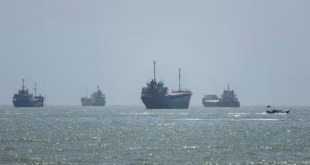
![Numerous merchant ships belonging to Iran and other countries remain at anchor in the Strait of Hormuz in Bandar Abbas, Iran, on September 10, 2026. [Fatemeh Bahrami – Anadolu Agency]](https://uskenergy.com/wp-content/uploads/2026/10/Hormuz-310x165.webp)