The new pipeline will undoubtedly make UAE less vulnerable to disruptions in Hormuz. The country is also not new to the idea of bypassing the strait.
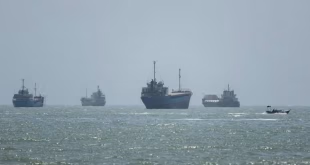
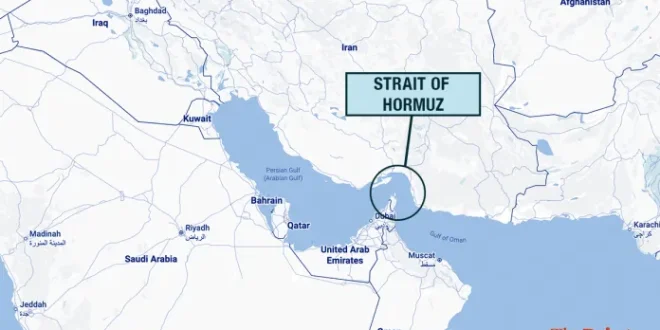
New Delhi: As conflict in West Asia raises fresh concerns over the security of the Strait of Hormuz—the world’s most important oil transit chokepoint—the United Arab Emirates (UAE) is accelerating construction of a new pipeline that would allow more of its crude exports to bypass the narrow waterway.
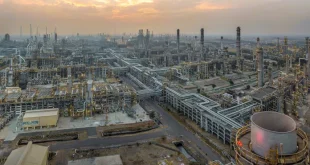
The Abu Dhabi National Oil Company (ADNOC) is fast-tracking its new ‘West-East Pipeline’, expected to be completed by 2027. Once operational, the pipeline will double the UAE’s crude export capacity through Fujairah, its strategic port on the Gulf of Oman outside the Strait of Hormuz.
The project comes at a crucial time for Abu Dhabi. The UAE’s decision to quit OPEC+ (Organization of the Petroleum Exporting Countries and allies) was not just about producing more oil. It was also about ensuring it could export more oil on its own terms and with fewer geopolitical constraints.
By expanding its Hormuz bypass infrastructure, the UAE aims to strengthen its ability to increase exports, even during periods of regional instability. The project could also provide major Asian buyers, including India, with a more secure route for crude supplies.
ThePrint explains why the new pipeline is central to the UAE’s post-OPEC strategy, how it could reduce the risks associated with Hormuz, and why it matters for India’s energy security.
Speaking at an Atlantic Council event last week, ADNOC chief executive Sultan Al Jaber said, “Energy security is no longer just about your ability to continue to produce. It is about routes, access, storage, and redundancy. Right now, too much of the world’s energy still moves through too few chokepoints.”
He added: “That is exactly why the UAE made the decision more than a decade ago to invest in infrastructure that bypasses the Strait of Hormuz and it is why we moved ahead with our second pipeline in 2025. Today it’s already almost 50 percent complete, and we are accelerating its delivery toward 2027.”
More oil and flexibility
The UAE is not new to the idea of bypassing Hormuz. Since 2012, the country is operating the Abu Dhabi Crude Oil Pipeline (ADCOP), which transports crude from the inland Habshan oilfields to Fujairah on the Gulf of Oman.
With a capacity of 1.5 million barrels per day, the purpose of ADCOP was to reduce reliance on Hormuz. Since the eruption of the West Asia conflict, the pipeline has reportedly been operating at full capacity.
Now, with the UAE’s decision to opt out of OPEC+ in May 2026 after repeatedly expressing dissatisfaction over its production quotas which did not align with its growing output capacity, the development of the new pipeline has gained more significance.
“The main logic is clear: if the UAE wants to expand output, it also needs a more secure export route that is less exposed to Hormuz risk,” Umud Shokri, Energy Strategist and Senior Visiting Fellow at George Mason University in the US, told ThePrint.
Shokri said the new pipeline fits into Abu Dhabi’s broader strategy of expanding production and gaining greater export flexibility. In his view, the project should be seen as part of a long-term effort to strengthen the UAE’s position in global energy markets rather than as a short-term response to any single geopolitical event.
Can it reduce Hormuz risk?
The new pipeline will undoubtedly make the UAE less vulnerable to disruptions in Hormuz. In the event of a blockade, military escalation or disruption to shipping traffic, Abu Dhabi would still be able to move large volumes of crude through Fujairah.
That additional capacity would also strengthen the UAE’s position as one of the few Gulf producers with a substantial export route that bypasses Hormuz.
“Additional UAE export capacity can materially reduce supply risks,” Shokri said. “It gives Abu Dhabi a stronger bypass option during Gulf crises and can help moderate price spikes by keeping more crude moving through Fujairah.”
However, the pipeline is not a complete answer to global energy security concerns. Hormuz remains critical for much of the Gulf’s oil and gas trade, and any disruption there would still have major consequences for international markets.
“Hormuz remains essential for other producers, including Iraq, Kuwait, Qatar’s LNG exports, and parts of Saudi flows,” Shokri said. “Pipelines, storage hubs and ports can also become targets during conflict. So, the pipeline improves resilience, but it does not remove geopolitical risk.”
In other words, while the new pipeline can reduce risk for the UAE, it cannot eliminate the strategic importance of Hormuz for the wider Gulf region.
What’s in it for India
For India, which imports more than 85 percent of its crude oil requirements and remains heavily dependent on West Asian supplies, the project has direct implications for energy security.
“For India, the project is important because it could provide Indian refiners with more reliable access to UAE crude during regional tension,” Shokri said.
Any disruption in Hormuz typically leads to higher freight rates, increased insurance costs and delays in crude shipments. Those costs eventually get transferred into domestic fuel prices.
The Fujairah route provides an important alternative. Oil loaded from the UAE’s eastern coast can enter the Arabian Sea directly without transiting Hormuz, reducing exposure to one of the world’s most sensitive maritime chokepoints.
“This could reduce shipping delays, insurance exposure and disruption risk for Indian buyers,” Shokri said. “Given India’s high dependence on imported crude and its continued reliance on Gulf barrels, any additional Hormuz-bypass capacity strengthens India’s energy security.”
More broadly, the pipeline also reflects a strategic shift in Gulf energy geopolitics. “Gulf producers are trying to reduce full dependence on Hormuz by developing overland pipelines, alternative ports, storage hubs, and export corridors,” Shokri said.
While Hormuz will remain a key route for Gulf energy exports, its monopoly is gradually being reduced as producers invest in alternative corridors and infrastructure.
For India and other Asian economies dependent on Gulf crude, the shift could prove significant. As geopolitical tensions remain elevated, the reliability of export routes matters almost as much as the oil flowing through them.