Recovery Will Not Be Simply a Return to the Old Model, Now That Gulf States Are Diversifying Their Energy and Economies
After Israel and the United States attacked the Islamic Republic of Iran on February 28, 2026, the Islamic Revolutionary Guard Corps responded with missiles and drones targeting oil facilities, ports, and airports across Saudi Arabia, the United Arab Emirates, Bahrain, and Kuwait. Iranian strikes also disrupted the Strait of Hormuz, through which 20 percent of global oil and liquefied natural gas flows.
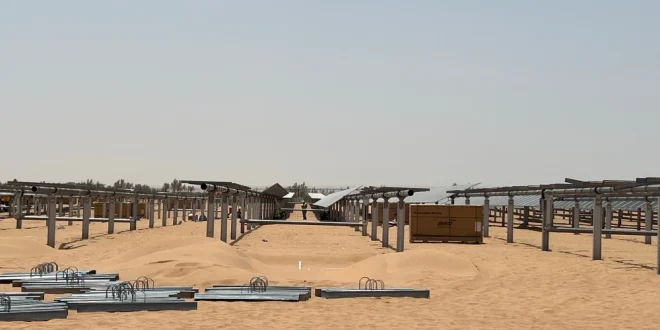
Long before the current war, many Gulf Cooperation Council states began diversifying their energy and economies. Saudi Arabia and the United Arab Emirates had already committed to solar expansion. Saudi Arabia had already advanced multi-gigawatt procurement rounds for its solar network before February 2026. The United Arab Emirates had scaled capacity under its net-zero plans.
Officials and executives have started treating solar energy less about climate and more as insurance.
What changed after February 28 was urgency. Officials and executives have started treating solar energy less about climate and more as insurance. In early April 2026, the Emirati clean energy company Masdar moved forward with a multibillion-dollar renewable partnership, expanding into Asia and reducing regional concentration risk. Inside the Persian Gulf, policymakers began to push distributed solar and grid resilience since centralized systems fail completely, but distributed systems fail only in parts.
Industry leaders have said this directly. At CERAWeek in March 2026, energy executives and policymakers linked the conflict to a renewed focus on domestic energy. The head of the International Energy Agency argued that crises like this push countries toward “homegrown energy” to reduce exposure. Industry experts agreed.
Solar energy fits this shift, but it does not solve the problem. Large solar parks remain fixed targets. They depend on transmission networks that are also vulnerable to attack but are not vulnerable to maritime choke points. Oil must move. Solar can produce locally.
What changed perceptions was the exposure of digital infrastructure. Data centers in the United Arab Emirates and Bahrain experienced disruptions in early March, affecting cloud services and financial systems. These incidents show that artificial intelligence (AI) and digital sectors do not sit outside geopolitical risk. They rely on electricity, cooling, and physical protection. They sit on the same ground as everything else.
The Gulf has invested heavily in AI partnerships and data infrastructure in recent years, including projects tied to U.S. firms and sovereign-backed entities. Those investments were supposed to represent the future. The conflict shows they also represent new targets. Data centers face both physical threats and cyber risks. They also depend on stable energy systems, which the conflict has already strained. Building more servers does not remove exposure. It redistributes it.
When the Strait of Hormuz opens, high oil prices will produce ample revenue for development.
It is unclear if energy diversification will be enough to enable Gulf Arab economies to return to the status quo ante. Over the past five years, Saudi Arabia, the United Arab Emirates, and Bahrain have invested in infrastructure to transform their region into an artificial intelligence hub. Energy was plentiful, space available, and environmental regulations lax. But Iran’s strikes on data centers highlight their vulnerability, and that shakes investors. Images of drones over Dubai and iconic hotels aflame will also depress growth in the short term. Oxford Economics has already revised regional growth forecasts downward, pointing to output losses and demand shocks. The World Bank has also cut projections, reflecting similar pressures.
Still, the regional outlook is sunny. When the Strait of Hormuz opens, high oil prices will produce ample revenue for development. Sovereign wealth funds, with assets exceeding $4 trillion, give governments room to stabilize markets and maintain spending. But recovery will not be simply a return to the old model. Governments will spend more on infrastructure protection, building redundancy, and supply chain diversification. Investment in systems that reduce reliance on single points of failure will accelerate.
Solar energy plays a role in that shift, but it does not represent a clean break. It reduces exposure to some risks while introducing others. The same applies to AI and digital infrastructure. The Persian Gulf will simply move toward a system where risks spread across sectors, instead of concentrating in one.

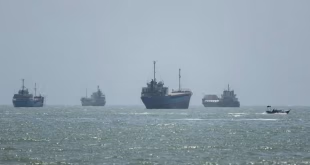
![Numerous merchant ships belonging to Iran and other countries remain at anchor in the Strait of Hormuz in Bandar Abbas, Iran, on September 10, 2026. [Fatemeh Bahrami – Anadolu Agency]](https://uskenergy.com/wp-content/uploads/2026/10/Hormuz-310x165.webp)