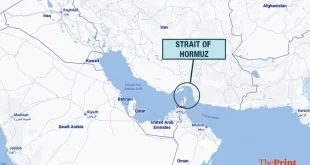
The idea of substituting Venezuelan oil for Persian Gulf oil has become more relevant as energy security is increasingly shaped by chokepoints, sanctions, and regional conflict. Persian Gulf producers remain central to global oil supply, but a large share of their exports depends on the Strait of Hormuz. The U.S. Energy …
Read More »Kazakhstan and the Iran-Israel war: Navigating risks, opportunities, and strategic neutrality
Kazakhstan, a landlocked Central Asian state with a long-standing multi-vector foreign policy, has been indirectly affected by the 2025–2026 escalation between Israel, the United States, and Iran. The conflict has created both risks and opportunities for Astana. Kazakhstan has tried to preserve pragmatic neutrality while deepening ties with Israel, Gulf states, and …
Read More »Iran promises ‘utter ruin’ if war restarts. Here’s what could happen if diplomacy fails
As negotiations between the United States and Iran edge toward a possible agreement, Tehran is increasingly signaling that any return to war would look very different from the last. US officials said Thursday that a tentative agreement had been reached in talks between Tehran and Washington and was awaiting President Donald …
Read More »Trump’s Iran adventure must not end up rewarding Tehran over Hormuz
No serious policymaker should want an open-ended confrontation in the Strait of Hormuz, but a deal that rewards Iran for closing or restricting the strait would create a long-term problem in exchange for short-term calm The Strait of Hormuz remains one of the world’s most important maritime chokepoints. In normal …
Read More »UAE’s post-OPEC strategy involves a new oil pipeline outside Strait of Hormuz. What it means for India
The new pipeline will undoubtedly make UAE less vulnerable to disruptions in Hormuz. The country is also not new to the idea of bypassing the strait. New Delhi: As conflict in West Asia raises fresh concerns over the security of the Strait of Hormuz—the world’s most important oil transit chokepoint—the United …
Read More »The UAE’s Fujairah bet: Export flexibility, energy security, and regional leverage
The UAE’s planned second Fujairah, or West-East, pipeline marks a major shift in Gulf energy security and export strategy. It matters not only because it reduces dependence on the Strait of Hormuz, but because it gives Abu Dhabi more freedom to manage exports, expand production, and strengthen its economic leverage. Announced for …
Read More »War, oil, and a Middle Eastern renewable energy transition
One week into the United States-Israel war on Iran in late February, missiles shifted towards each belligerent’s fossil fuel infrastructure. By March, President Donald Trump declared he wanted to “take the oil in Iran.” The war quickly devolved into a battle over energy targets and the control of oil prices Though oil …
Read More »Is Iraq’s Seven-Day Oil Recovery Claim Realistic?
Restarting Production Requires More than Reopening Valves, Likely Taking Weeks Rather than Days Iraq’s claim that it can restore oil production and exports within seven days of a Strait of Hormuz reopening may reassure markets, but the process would not be simple. Iraqi officials, including Deputy Oil Minister Basim Mohammed …
Read More »The long shock: How the Iran war is remaking the global economy
The closure of the Strait of Hormuz marks a rupture in the post-1970s energy order, with consequences that may redefine how the global economy functions The US and Israeli-led war on Iran has initiated a chain reaction that has culminated in the most significant oil supply disruption in modern history. Iran’s retaliatory strikes against …
Read More »The United Arab Emirates Exits OPEC and OPEC+
The Decision Sends a Signal That National Priorities Now Outweigh Collective Discipline The United Arab Emirates’ decision to leave OPEC and the expanded OPEC+ that brought in nearly a dozen other oil-producing members not included in the original OPEC, effective May 1, 2026, is more than a routine policy shift. …
Read More »