June 19, 2026
ARTICLES, Energy Market, important
If Gulf-linked private capital participates in Iran’s reconstruction, it would show that regional actors are trying to shape Iran’s behavior and buy protection through economic incentivesTwo days after President Donald Trump announced agreement on a memorandum of understanding prolonging a ceasefire with Iran, Qatari Energy Minister Abbas Aliabadi said feasibility studies were …
Read More »
June 11, 2026
ARTICLES, Energy Market, Featured, important, Media
The escalation involving the United States, Israel, and Iran has renewed attention on the energy-security vulnerabilities of the Gulf Cooperation Council (GCC) states: Bahrain, Kuwait, Oman, Qatar, Saudi Arabia, and the United Arab Emirates. The conflict has affected maritime confidence around the Strait of Hormuz, one of the world’s most …
Read More »
March 30, 2026
ARTICLES, Energy Market, important
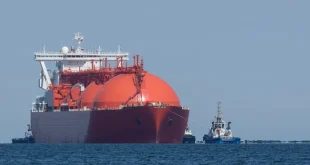
QatarEnergy’s force majeure declaration crystallises a broader shift in global energy markets toward fragmentation and securitisation. The disruption has intensified market tightness, driven price volatility, and exposed the vulnerability of critical infrastructure to geopolitical conflict QatarEnergy’s March 24 declaration of force majeure on parts of its long-term LNG contracts marks …
Read More »
March 19, 2026
ARTICLES, Energy Market, important
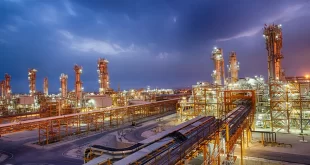
The crisis has shifted from a logistical bottleneck to a structural supply shock, with far more severe implications for global energy stability On March 18, Israel struck Iran’s South Pars gas field and the onshore processing hub at Asaluyeh in Bushehr province, marking a major escalation in the conflict begun by the …
Read More »
March 17, 2026
Energy Market, Featured, important
Helium Is Vital to Semiconductor Manufacturing, Aerospace Industries, and Medical Infrastructure Such as MRI Scanners An overlooked consequence of the U.S. and Israeli conflict with Iran is the shock to global helium trade. While headlines have focused on oil price spikes and liquefied natural gas disruptions, helium extracted as a byproduct of …
Read More »
February 28, 2026
ARTICLES, Energy Market, important
Doha Converted Gas Revenue Into Global Influence and Marketed Itself as the Supplier That Delivers Even During Turbulence Qatar reads Iran-U.S. tensions through the blunt logic of self-preservation. Doha worries less about “regional instability” than about losing the conditions that let it build an liquefied natural gas empire with limited regional contestation. …
Read More »
March 12, 2024
ARTICLES, Energy Market, Featured, important
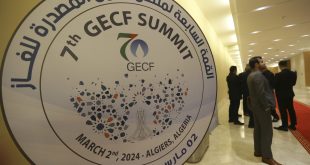
On the heels of its latest forum in Algiers, the Gas Exporting Countries Forum (GECF) has grown substantially in size and influence, highlighting the essential role of natural gas in balancing global energy, promoting sustainability, and addressing market volatility, technological challenges, and geopolitical tensions. The 7th Gas Exporting Countries Forum (GECF) Summit in Algiers …
Read More »
March 11, 2024
ARTICLES, Energy Market, Featured, important
As Qatar sets higher ambitions for its gas output, Iranian officials scramble to justify their under-performance in developing the South Pars field, resorting to statistical maneuvers to deflect criticism. Sakhavat Asadi, the chief executive of Iran’s Pars Special Economic Zone Organization, has claimed that Iran’s natural gas production from the …
Read More »
December 12, 2023
ARTICLES, Energy Market, Featured, important
Iran, despite having the world’s second-largest natural gas reserves, has not yet become an LNG producer, and faces a critical shortage for essential domestic needs. Natural gas that has been cooled to a liquid form for convenient and secure non-pressurized storage or transportation is known as liquefied natural gas, or LNG. …
Read More »
September 21, 2023
ARTICLES, Energy Market, important
The recent agreement between the United States and Iran could portend well for regional security—or it could reinforce existing divisions and promote further escalatory behavior from each side, with significant economic consequences in either case. The recently announced prisoner swap between the United States and Iran has spurred debates about how it …
Read More »