August 21, 2026
INTERVIEWS
Brent crude rises to highest level in nearly a month as US-Iran deadlock keeps Strait of Hormuz disrupted, raising risks of higher import bills, fuel prices & inflation for India.New Delhi: Nearly six months into the US-Iran war, the oil market is again facing supply uncertainty, with Brent crude climbing …
Read More »
August 21, 2026
Energy Market, important, INTERVIEWS, Media
Amir Soltanzadeh 08/19/2026August 19, 2026 Five countries border the Caspian Sea, but none owns a fixed share. A 2018 convention established rules for navigation, security and fishing while leaving some seabed borders unresolved. For decades, debate in Iran over the Caspian Sea has often centered on a deceptively simple question: What percentage …
Read More »
August 12, 2026
ARTICLES, Energy Market, important
Geothermal Projects Carry Substantial Risk Because Unsuccessful Wells or Underperforming Reservoirs Can Absorb CapitalThere is little good news inside Iran regarding electricity. The government long ago instituted rotations of blackouts and brownouts to manage shortages, but even these are no longer predictable. Although Iranian officials might blame the war, the …
Read More »
August 3, 2026
ARTICLES, Energy Market, important
On 29th July 2026, a suspected drone struck the Energos Winter, a US-owned floating storage and regasification unit (FSRU), at Egypt’s Damietta port. The resulting fire spread to the nearby Gaslog Salem. Both crews were evacuated, the fire was contained, and no casualties were reported. Maritime security firms Ambrey and Vanguard identified …
Read More »
July 30, 2026
Energy Market, important
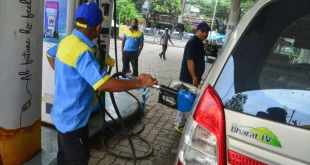
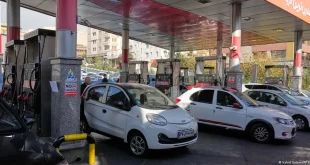
Amir Soltanzadeh Iranian authorities want to dampen fuel consumption, but a sudden increase in gasoline prices risks social unrest as many Iranian households are already under severe economic pressure Iran is moving closer to politically sensitive changes in gasoline pricing as the government struggles with a widening gap between domestic …
Read More »
July 27, 2026
ARTICLES, Energy Market, important
Yanbu May Relieve Immediate Pressure, but It Does Not Remove Geopolitical Risks for Saudi Arabia While cargo passage through the Strait of Hormuz is hampered, Saudi Arabia can benefit from the Red Sea port of Yanbu to export oil. The East-West Petroline pipeline allows Saudia Arabia to divert oil from fields in …
Read More »
July 21, 2026
ARTICLES, Energy Market, important
The recent disruption in the Middle East, including the closure and uneven reopening of the Strait of Hormuz, has exposed a shift in the global energy system’s principal vulnerability. Initial concern focused on whether enough crude oil could reach the market. Yet crude flows have recovered faster than supplies of …
Read More »
July 19, 2026
INTERVIEWS, Media
The attacks on Iran’s infrastructure came on the sixth consecutive day of U.S. strikes. A retaliatory attack by Iran caused damage to a power and desalination plant in Kuwait.By Rachel Chason, Mohamad El Chamaa and Suzan Haidamous The U.S. military struck bridges, energy infrastructure and a port facility in southern Iran overnight …
Read More »
July 16, 2026
ARTICLES, Energy Market, important
The concept of “corridor wars” describes intensifying competition among major powers over critical trade, energy, and transit routes in an era of weaponized interdependence. Unlike traditional territorial conflicts, these struggles center on controlling, securing, bypassing, or disrupting chokepoints: narrow maritime passages and overland links through which global commerce flows. Key arenas include …
Read More »
July 10, 2026
ARTICLES, important, Media
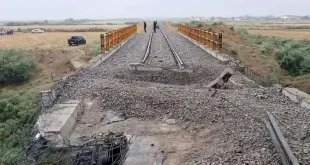
A reported US strike on a railway bridge in northern Iran has drawn attention to a lesser-known front in the widening conflict: the battle over the transport corridors linking Iran to Central Asia, Russia and China. Iranian state media and the IRGC said cruise missiles attributed to US forces struck …
Read More »


![In Egypt, River Nile in Damietta [Mohamed Eissa/Wikipedia]](https://uskenergy.com/wp-content/uploads/2026/08/2013_03_18-In-Egypt-River-Nile-in-Damietta1280px-River_Nile_Damietta_Section--310x165.webp)
![A ship waits to pass through the Strait of Hormuz following the two-week temporary ceasefire between the US and Iran, which is conditional on the opening of the strait, in Oman on April 8, 2026. Shipping traffic remained at low levels, reported. [Shady Alassar – Anadolu Agency]](https://uskenergy.com/wp-content/uploads/2026/07/Hormuz-310x165.webp)

![The Bab al-Mandeb Strait. [Photo/AA]](https://uskenergy.com/wp-content/uploads/2026/07/Bab-ol-Mandab-310x165.webp)