Even Limited Damage Can Force Shutdowns, Suspend Exports, and Trigger Panic Across Energy Markets
The Gulf Cooperation Council states—Bahrain, Kuwait, Oman, Qatar, Saudi Arabia, and the United Arab Emirates—long have sustained global energy stability. As the conflict with Iran expands, it directly threatens Persian Gulf oil and gas infrastructure and undermines that stability.
The latest attacks suggest a clear shift. After U.S. and Israeli strikes on Iranian nuclear facilities on February 28, 2026, Iran’s retaliation moved beyond military targets and toward critical energy assets. On March 2, 2026, Iranian drones struck Qatar’s Ras Laffan liquefied natural gas complex, forcing QatarEnergy to halt production and declare force majeure on shipments. Around the same time, Saudi Aramco shut down its Ras Tanura refinery after debris from intercepted Iranian drones caused a small fire.
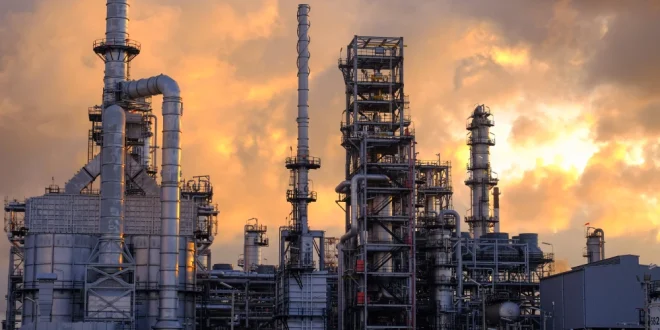
The Persian Gulf contains some of the world’s most valuable and concentrated energy infrastructure.
These incidents matter not simply because they hit major facilities, but also because they reveal a broader strategic pattern. If Iran or Iran-linked actors systematically begin to target Persian Gulf oil and gas fields, refineries, export terminals, and processing hubs, the consequences will extend far beyond the region. Oil and gas prices would rise sharply. Shipping and trade would face new disruptions. Inflation would intensify. Supply chains would come under renewed strain. Europe and Asia would bear much of the cost.
The Gulf Cooperation Council’s vulnerability starts with geography. The Persian Gulf contains some of the world’s most valuable and concentrated energy infrastructure. Major processing plants, export terminals, desalination facilities, and refineries sit along exposed coastlines within range of drones, missiles, and sabotage operations. Much of the region’s oil and liquified natural gas exports depend on the Strait of Hormuz, one of the world’s most critical maritime chokepoints.
This weakness is not new. The 2019 attack on Saudi Arabia’s Abqaiq facility showed how a limited strike could temporarily knock out a large share of the kingdom’s oil production. That attack should have ended any illusion that traditional defenses were enough. Yet while Gulf states improved some protections, the region still struggles against low-cost, hard-to-detect drones and other asymmetric threats. Iran understands this gap and has built a strategy around it.
Tehran does not need to destroy Persian Gulf energy infrastructure outright to achieve its aims. It needs only to create enough uncertainty to raise costs, interrupt flows, and shake confidence. Even limited damage can force shutdowns, suspend exports, and trigger panic across energy markets. In that sense, the strike on Ras Laffan was more than an operational disruption. It was a warning that one of the world’s most important liquified natural gas hubs no longer can be treated as secure.
Tehran does not need to destroy Persian Gulf energy infrastructure outright to achieve its aims.
That is especially alarming because Ras Laffan is not just another industrial site. It is the center of Qatar’s liquified natural gas export system and a pillar of global gas supply. Any prolonged outage there would hit Europe and Asia almost immediately. Europe, already more dependent on liquified natural gas after reducing Russian pipeline gas imports, has little room for complacency. Asia, where many of Qatar’s long-term customers are located, would also face tighter supply and fiercer competition for cargoes. Prices would respond fast, and so would inflation.
Ras Tanura carries similar importance on the oil side. As a core part of Saudi Arabia’s energy infrastructure, any disruption there affects refining capacity, domestic fuel balances, and export reliability. Even when physical damage remains limited, precautionary shutdowns can still tighten supply and unsettle traders. Markets react not only to what is lost, but to what may be lost next.
That is what makes the current escalation so dangerous. The threat is no longer a single spectacular strike. It is the possibility of a campaign. Repeated attacks on Gulf fields, refineries, liquified natural gas facilities, storage sites, and export terminals would create rolling disruptions that markets could not easily absorb. If the Strait of Hormuz also comes under sustained pressure, the shock would become global.
The effects would spread quickly. Higher oil and gas prices would raise transport and manufacturing costs. Freight rates and insurance premiums would jump as shipping companies avoid high-risk waters. Import-dependent economies in Europe and Asia would face rising energy bills, weaker industrial output, and stronger inflationary pressure. Central banks already struggling to contain prices would have fewer good options. A regional conflict would become a global economic problem.
The world cannot treat attacks on Persian Gulf energy assets as isolated regional events.
The damage would not stop with energy markets. Persian Gulf economies themselves would face deeper pressure. Attacks on critical infrastructure undermine investor confidence, tourism, and long-term diversification plans. That matters because Gulf Cooperation Council states are no longer defined only by oil exports. Saudi Arabia, the United Arab Emirates, and Qatar have all invested heavily in finance, logistics, technology, and services. But these sectors rely on stability. When drones can reach airports, industrial zones, hotels, and energy facilities, the image of the Persian Gulf as a secure business environment begins to erode.
This is why Persian Gulf energy infrastructure security is now about far more than regional defense. It has become central to global inflation control, supply chain resilience, and economic stability. The world cannot treat attacks on Persian Gulf energy assets as isolated regional events. They strike directly at the systems that keep fuel, goods, and capital moving across continents.
The immediate lesson is straightforward. Gulf Arab states and their partners must treat infrastructure protection as a strategic priority. That means stronger air and missile defenses, better counter-drone systems, more resilient cyber-physical protection, and faster repair capacity. It also means reducing exposure through export diversification, alternative routes, and greater redundancy across key facilities.
The broader lesson is harder to ignore. The expanding Iran conflict has exposed how fragile global energy security remains. A few well-placed attacks in the Persian Gulf can unsettle prices, disrupt trade, and weaken growth far beyond the Middle East. If this pattern continues, Persian Gulf energy infrastructure no longer will be seen as a source of stability. It will be viewed as one of the world’s most dangerous economic fault lines. https://www.meforum.org/mef-observer/irans-war-on-gulf-state-energy-infrastructure-reverberates-beyond-oil-and-gas

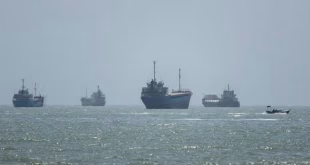
![Numerous merchant ships belonging to Iran and other countries remain at anchor in the Strait of Hormuz in Bandar Abbas, Iran, on September 10, 2026. [Fatemeh Bahrami – Anadolu Agency]](https://uskenergy.com/wp-content/uploads/2026/10/Hormuz-310x165.webp)