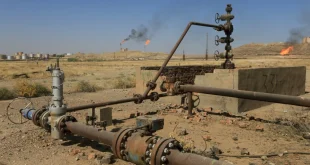
By Brian Spegele If President Trump follows through on his threat to attack Iranian power assets, the strikes would almost certainly target plants in the country that generate electricity from natural gas. Around 80% of power generation in Iran came from natural gas as of 2023, according to the International …
Read More »What Does Iraq’s Force Majeure Declaration Mean for Energy Markets?
Iraq Has Not Reduced Output Due to Policy Decisions or Quotas—It Has Shut Down Production Because It Cannot Export On March 20, 2026, Iraq’s Oil Ministry declared force majeure on oilfields operated by foreign companies after disruptions in the Strait of Hormuz halted tanker traffic and blocked exports. The decision reflected a breakdown in …
Read More »Kharg Island: The oil lifeline that could ignite a global energy shock
If the conflict intensifies and Kharg’s export facilities become targets, the result could be a severe supply disruption that drives oil prices sharply higher and destabilises energy markets worldwide. In most wars, geography quietly shapes the outcome. In the escalating confrontation between Iran, Israel, and the United States, one small …
Read More »Iraq’s Northern Exports Return, but Supply Risks Persist
Disputes Between Baghdad and the Kurdistan Region May Limit Demand for Northern Iraqi Crude On March 17, 2026, Iraq’s federal government and the Kurdistan Regional Government agreed to resume crude exports through the northern segment of the Iraq-Turkey Pipeline to Turkey’s Mediterranean port of Ceyhan. By March 18, shipments had commenced, with …
Read More »South Pars Strike Marks Major Step in Persian Gulf Energy Warfare
The crisis has shifted from a logistical bottleneck to a structural supply shock, with far more severe implications for global energy stability On March 18, Israel struck Iran’s South Pars gas field and the onshore processing hub at Asaluyeh in Bushehr province, marking a major escalation in the conflict begun by the …
Read More »Iran’s Energy Sector Facing Structural Economic Strain
Iran’s hydrocarbon sector, which holds the world’s fourth-largest oil reserves and second-largest natural gas reserves, remains structurally significant to global energy markets. However, it is increasingly constrained by domestic macroeconomic pressures and external trade frictions. As of early 2026, rapid currency depreciation, persistently high inflation, recurring gas shortages, and episodic …
Read More »Why the Iran-Israel War Matters for the World’s Helium Supply
Helium Is Vital to Semiconductor Manufacturing, Aerospace Industries, and Medical Infrastructure Such as MRI Scanners An overlooked consequence of the U.S. and Israeli conflict with Iran is the shock to global helium trade. While headlines have focused on oil price spikes and liquefied natural gas disruptions, helium extracted as a byproduct of …
Read More »IMEC in the crossfire: How an Iran-Israel war could reshape India’s West Asia strategy
For India, the challenge will be to pursue connectivity ambitions while carefully managing the geopolitical risks associated with a volatile West Asia The India-Middle East-Europe Economic Corridor (IMEC), announced during the G20 summit in New Delhi in September 2023, is one of the most ambitious connectivity initiatives linking Asia, West …
Read More »PM reviews oil, gas supply as analysts warn reliance on imports leaves India open to war disruptions
As Iran war enters 11th day, government prioritises household gas supply, boosts LPG output and invokes Essential Commodities Act amid concerns over potential shortages. New Delhi: Prime Minister Narendra Modi Tuesday met External Affairs Minister S. Jaishankar and Petroleum Minister Hardeep Singh Puri to review India’s oil and gas situation …
Read More »Iran’s Retaliation Disrupts Liquefied Natural Gas Markets, Threatens Global Energy Security
The Strait of Hormuz Carries Roughly 20 Percent of Global Liquefied Natural Gas Trade and a Similar Share of Seaborne Oil The escalating conflict between the United States, Israel, and Iran has triggered one of the most significant disruptions to global energy markets in recent years. After U.S. and Israeli …
Read More »