Summer nears, yet Iran’s power troubles run deeper than just hot days. Blackouts loom not simply due to weather but because neglect has weakened the grid over years. Outdated plants struggle now where new investment was ignored before. Fuel runs low at times, worsened when rivers shrink beneath long dry spells. People use energy …
Read More »The price of passage: Iran, Hormuz and the future of India’s energy security
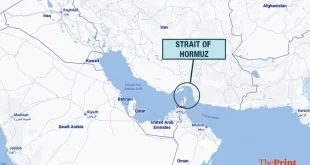
Global energy security depends not only on whether ships can pass through Hormuz, but whether they can do so freely, predictably, and without paying tribute disguised as environmental stewardship The Strait of Hormuz is one of the world’s most important energy chokepoints, with about 20 million barrels of oil passing …
Read More »The Strategic Logic of Azerbaijan’s Absheron Phase 2
New Gas from Absheron Will Not on Its Own Transform Europe’s Energy Balance, but It Will Add Valuable Supply Diversity On June 1, 2026, during Baku Energy Week, Azerbaijan’s State Oil Company, TotalEnergies, ADNOC International, part of Abu Dhabi National Oil Company, and Turkey’s state pipeline company, BOTAŞ, signed a 15-year natural …
Read More »UAE’s post-OPEC strategy involves a new oil pipeline outside Strait of Hormuz. What it means for India
The new pipeline will undoubtedly make UAE less vulnerable to disruptions in Hormuz. The country is also not new to the idea of bypassing the strait. New Delhi: As conflict in West Asia raises fresh concerns over the security of the Strait of Hormuz—the world’s most important oil transit chokepoint—the United …
Read More »Powering Politics: The Crucial Role of Energy Security in the U.S. Presidential Race
In the run-up to the next U.S. presidential elections, energy security is becoming an increasingly important issue. Candidates’ suggested methods for improving energy security are being closely examined as they present their energy agendas. While some place greater emphasis on attaining energy independence, others give priority to more general goals …
Read More »Amid a Climate in Crisis, the UAE Doubles Down on Renewable Energy
The United Arab Emirates has decided to leverage its immense wealth to bring about a green revolution, but staying the path will require an enduring commitment. As increasingly devastating climate events underline the need to transition away from fossil fuels, the rapid and sustainable development of renewable energy resources has …
Read More »Powering up: Turkey-Iraq transmission line is part of a broader strategic shift
On July 21, 2024, Baghdad inaugurated a new power line connecting Turkey and Iraq to handle Turkish electricity imports. This 115-kilometer (71-mile) transmission line is expected to deliver 300 megawatts of energy to a power station west of Mosul with the aim of supplying northern Iraq, including the regions of Nineveh, Salahuddin, and …
Read More »Iran-Saudi Agreement: In Search of Stable Oil Exports and New Relations
As a “neutral” power seeking to distance itself from the Middle East’s various geopolitical rivalries, China has supported reconciliation and peace to stabilize its access to the region’s resources. The relationship between Iran and Saudi Arabia has been fraught with tension for decades, with each side accusing the other of interference in …
Read More »Saudi Nuclear Diplomacy and the Onset of Competition in the Region
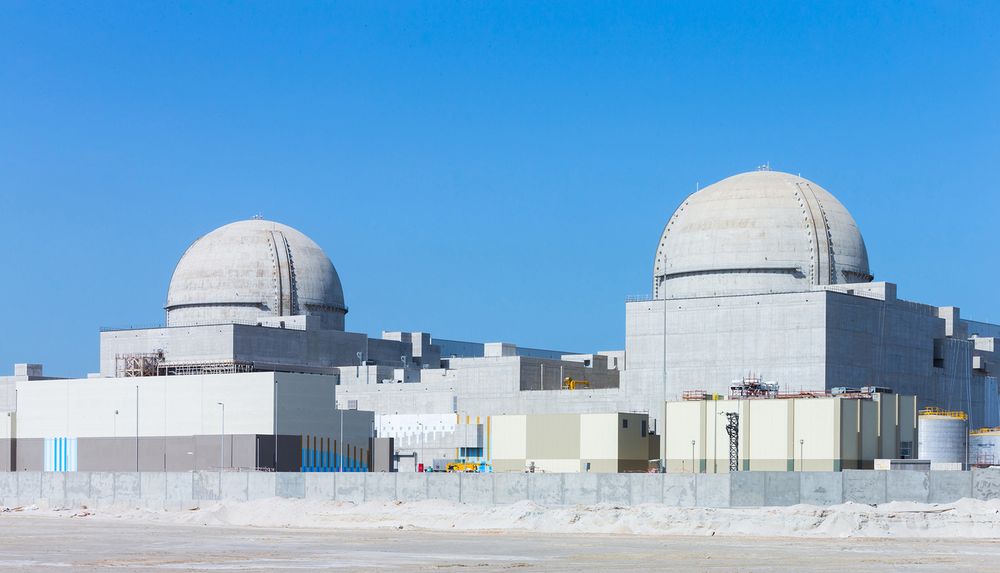
In recent years, Saudi Arabia has had a comprehensive plan to reduce the share of oil in the economy, and it is seeking to increase the share of both renewable energy and natural gas in electricity production for export. It is also investing in high value-added products to reduce dependence …
Read More »Nord Stream 2’s Future and the New era of US-Russia Competition
By exporting liquefied natural gas (LNG) to some European countries, Washington seeks to reduce their dependence on Russian gas The shale gas revolution and the U.S. becoming an exporter of energy have changed the geopolitics of energy. The U.S.’ entry into energy exports has intensified competition among traditional energy exporters. …
Read More »