A soft closure of the Strait of Hormuz can inflict much of the same damage as a declared blockade
The February 28 US-Israeli strikes on Iran have turned a regional military confrontation into a global market shock.
The conflict has begun to reprice energy, shipping, insurance, aviation, and financial risk. For global markets, the question is no longer whether oil rises on alarming headlines. It is whether the war has pushed the Strait of Hormuz from a routine geopolitical premium into a real supply disruption with broader consequences for inflation, currencies, and emerging markets.
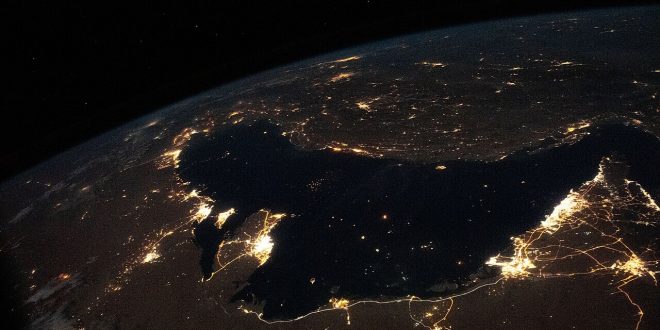
Hormuz matters because it remains one of the world’s most important energy chokepoints. The U.S. Energy Information Administration estimates that about 20 million barrels per day of crude oil and petroleum products moved through the Strait in 2024, equal to roughly one-fifth of global petroleum liquids consumption and more than one-quarter of global seaborne oil trade. Most of the LNG cargoes come from Qatar and go to Asia. Saudi Arabia and the United Arab Emirates have some bypass capacity, but alternative routes would still leave a very large share of Gulf exports exposed in a serious disruption.
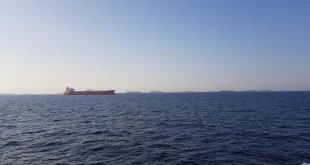
Already on March 1, large numbers of crude and LNG tankers had dropped anchor outside the Strait as operators reacted to worsening security conditions. At the same time, the U.S. Maritime Administration (MARAD) warned commercial vessels of military operations and potential retaliatory strikes by Iranian forces in the Strait of Hormuz, the Persian Gulf, the Gulf of Oman, and the Arabian Sea. The United Kingdom Maritime Trade Operations (UKMTO) center likewise described the maritime environment as highly volatile, citing significant military activity and elevated electronic interference.
The issue is not only whether Iran can formally “close” the Strait in a legal sense. It is whether Hormuz can become commercially unusable. In practice, a soft closure can inflict much of the same damage as a declared blockade. If shipowners face congestion, repeated calls to identify themselves, electronic interference, drone and missile risks, and uncertain insurance conditions, many will stop sailing before any official closure is announced.
Oil markets have reacted accordingly. Reuters reported that Brent rose about 10% after the initial strikes, with analysts warning that prices could move toward $100 per barrel or higher if disruption persists. Even with some rerouting through Saudi Arabia’s East-West pipeline and Abu Dhabi’s export routes, a serious Hormuz disruption could remove 8 million to 10 million barrels per day from world supply. That risk is larger because the market did not enter this crisis from a position of collapsing demand. Even partial disruption in Hormuz can matter more than spare capacity elsewhere.
The consequences extend beyond crude. Refined products such as diesel, gasoline, and jet fuel are exposed because transport disruption affects both feedstock access and refinery margins. LNG markets are especially vulnerable because Qatari exports depend on Hormuz, and most of those cargoes serve Asian buyers. That makes the conflict not only a Middle East oil shock but also a wider Asian gas and power-security problem. In effect, the same chokepoint now links Gulf military escalation to Asian utility costs, industrial margins, and import bills.
Shipping insurance is one of the main channels through which this crisis is spreading. Tanker traffic depends not just on whether ships can technically pass through Hormuz, but on whether operators can obtain war-risk coverage, whether charterers can absorb higher premiums, and whether crews are willing to enter an active conflict zone. MARAD’s advisory and UKMTO’s warnings point in the same direction: The insurance environment is deteriorating alongside the security environment. Once coverage becomes uncertain or prohibitively expensive, trade slows faster than the formal status of the waterway changes. Insurance, in effect, becomes the market’s enforcement mechanism for geopolitical fear.
Airspace closures have widened the shock beyond seaborne energy. When missile exchanges disrupt Gulf air corridors as maritime risk clogs shipping lanes, the costs spread into air freight, tourism, business travel, and trade timing. The Gulf is not only an energy-exporting region. It is also a major aviation and logistics bridge linking Europe and Asia. That means the conflict can raise costs through more than one channel at once, which is precisely why the economic impact matters even for countries far from the battlefield.
The spillovers into financial markets are already visible. Investors typically move toward safe-haven assets when oil shocks are tied to war risk, and this episode has again pushed attention toward gold, the yen, and the Swiss franc. The broader macro problem is that a sustained Hormuz disruption would raise fuel and freight costs, worsen inflation expectations, tighten financial conditions, and weigh most heavily on import-dependent emerging markets. In Asia and parts of Africa, that would mean weaker trade balances, greater currency pressure, and less room for central banks to support growth. What begins as a regional war premium can quickly become a wider growth headwind.
What moves markets next is straightforward. The biggest bullish trigger would be clear evidence that the soft closure is hardening into a sustained physical disruption, whether through further tanker damage, wider insurance withdrawal, mining fears, or successful attacks on Gulf export infrastructure. A second trigger would be longer-lasting airspace shutdowns and logistics disruptions that reinforce the sense that Gulf instability is no longer containable.
On the other side, prices could ease if naval protection restores confidence, traffic resumes, and the conflict is visibly capped. For policymakers, the lesson is blunt: Hormuz is not merely a tactical lever Iran can threaten or the United States can defend. It is a transmission belt between regional war and the global economy. If de-escalation comes quickly, some of the current premiums in oil, shipping, and safe-haven assets may fade. If it does not, markets may be entering a period in which Middle East war risk is more durably embedded in energy prices, insurance costs, and financial behavior.

![This handout image taken by the European Space Agency, captured by the Copernicus Sentinel-2 satellite, shows a view of Iran's Kharg island. [AFP]](https://uskenergy.com/wp-content/uploads/2026/03/Representational-Image-2026-03-14T174826.509-2026-03-cfb0244d80bdb96caafe790a619f1ef9-310x165.avif)