Doha Converted Gas Revenue Into Global Influence and Marketed Itself as the Supplier That Delivers Even During Turbulence
Qatar reads Iran-U.S. tensions through the blunt logic of self-preservation. Doha worries less about “regional instability” than about losing the conditions that let it build an liquefied natural gas empire with limited regional contestation. The shared North Dome/South Pars system, the world’s largest natural gas reservoir, underwrites Qatar’s wealth and diplomatic reach. Qatar accelerated development on its North Dome side while sanctions and technical constraints slowed Iran’s maintenance and exploitation of South Pars. That asymmetry trained Doha to operate as the dominant, largely uncontested player in global liquefied natural gas. Now U.S.-Iran uncertainty forces Qatar to weigh two threats at once: escalation that disrupts production and export chains, and détente that restores Iran’s access to capital and technology and turns Tehran into a stronger gas competitor.
Qatar built dominance by acting early and investing heavily.
North Dome/South spans roughly 3,745 square miles, with Qatar controlling the larger North Dome portion. The structure behaves as a connected system beneath the seabed, so pressure dynamics and operational disruptions on one side can affect output across the boundary. Qatar cannot separate its energy future from events on the Iranian side because geology and Persian Gulf logistics bind them together.
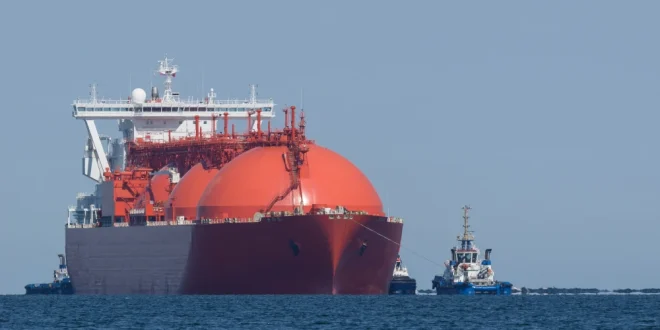
Qatar built dominance by acting early and investing heavily. Doha partnered with international majors, built liquefied natural gas trains and shipping capacity, and locked in long-term contracts across Europe and Asia. It then converted gas revenue into global influence and marketed itself as the supplier that delivers even during turbulence.
Sanctions widened the gap by restricting Iran’s access to finance, services, and specialized technology, especially equipment needed to sustain plateau production and manage reservoir pressure. Tehran expanded South Pars in phases but consumed much of its output domestically and struggled to build export capacity on Qatar’s scale. Qatar counted on Iran’s underperformance and planned around it.
The first risk Qatar sees is conflict. A war does not need to strike Qatari facilities directly to harm Qatar. Strikes on Iranian infrastructure can ignite fires, force shutdowns, and destabilize nearby industrial networks. Conflict also drives up insurance costs, raises maritime security burdens, and disrupts shipping patterns that liquefied natural gas depends upon. If escalation threatens or interrupts flows, buyers hedge and Qatar’s reliability premium erodes.
Conflict politicizes reservoir management. Because the field functions as one system, extraction imbalances can create pressure shifts and migration effects that Tehran can portray as cross-border loss. Iranian officials repeatedly have accused Qatar of capturing disproportionate value through faster development. In a crisis, Iran can weaponize these claims to justify retaliation or demands that constrain Qatar’s development pace. Doha wants to keep the field technical; war turns it into a sovereignty dispute.
The second risk troubles Qatar even more. Sanctions easing enables Iran to compete. Qatar has long relied on Iran’s isolation to limit export rivalry and preserve pricing leverage. If talks reduce sanctions pressure or open pathways for investment and technology, Iran can accelerate South Pars upgrades and redirect more gas toward export markets. Iran does not need to replicate Qatar’s liquefied natural gas machine to weaken Qatar’s position. It only needs to add credible incremental supply and signal sustained expansion. Liquefied natural gas markets price expectations, so the threat can narrow Qatar’s advantage before Iranian volumes arrive.
Iran does not need to replicate Qatar’s liquefied natural gas machine to weaken Qatar’s position.
Sanctions easing can also reshape field governance. A more capable Iran can press harder for coordinated development frameworks, oversight, and compensation narratives tied to migration. Qatar prefers autonomy. For decades, Doha set the pace while Iran struggled to keep up. If Iran narrows the gap, it can contest not only market share but also operational freedom, forcing Qatar to treat the reservoir as a negotiated space rather than a Qatari-led engine of dominance.
Iran therefore represents the rare challenger that can threaten Qatar at the source because it sits on the same reservoir and could scale faster if constraints lift. Qatar positions itself as a de-escalator to protect the asset, while it hedges against normalization that would strengthen Iran commercially. This pitch focuses on how U.S.-Iran tensions force Doha to price two futures at once: missiles that could disrupt the reservoir today, and diplomacy that could empower Iranian competition tomorrow.
Qatar treats the North Dome/South Pars complex as both a physical vulnerability and a market lever, so it calibrates policy to protect infrastructure while defending pricing power. If sanctions relief restores Iran’s access to capital and technology, Qatar expects buyers to demand tougher terms and greater flexibility even before Iran adds major export volumes.
Doha will likely urge restraint around critical energy infrastructure, emphasize risks to global liquefied natural gas flows, and offer mediation channels when useful. It will also lock in demand, accelerate expansions, and deepen ties with key buyers to defend market share against the possibility of Iranian re-entry. https://www.meforum.org/mef-observer/will-qatar-maintain-its-liquefied-natural-gas-edge-after-an-iran-war

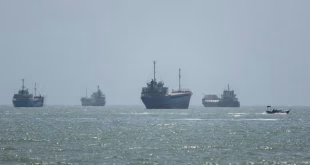
![Numerous merchant ships belonging to Iran and other countries remain at anchor in the Strait of Hormuz in Bandar Abbas, Iran, on September 10, 2026. [Fatemeh Bahrami – Anadolu Agency]](https://uskenergy.com/wp-content/uploads/2026/10/Hormuz-310x165.webp)