QatarEnergy’s force majeure declaration crystallises a broader shift in global energy markets toward fragmentation and securitisation. The disruption has intensified market tightness, driven price volatility, and exposed the vulnerability of critical infrastructure to geopolitical conflict
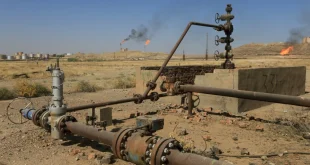
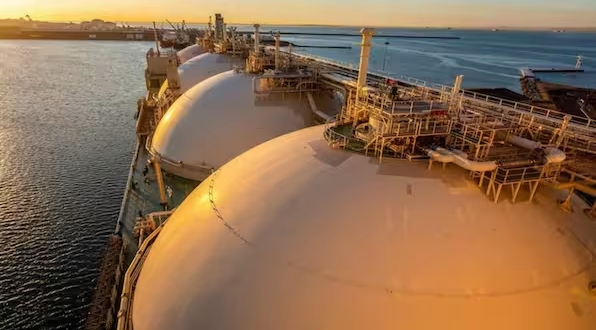
QatarEnergy’s March 24 declaration of force majeure on parts of its long-term LNG contracts marks a turning point in an already fragile global gas market. Triggered by Iranian missile strikes on Ras Laffan Industrial City on March 18–19, the disruption damaged key liquefaction units, including Trains 4 and 6, cutting Qatar’s export capacity by roughly 17 per cent, about 12.8 million tonnes per annum, from a baseline near 77 million tonnes.
With repairs expected to take three to five years and revenue losses estimated at around $20 billion annually, the shock is neither temporary nor easily reversible.
The immediate market reaction underscores the scale of the disruption. European gas benchmarks surged by 35–50 per cent, while Asian spot LNG prices rose nearly 40 per cent. These price movements reflect more than short-term panic. They reveal structural tightness in global LNG markets that had already been strained by post-2022 shifts following the Russia–Ukraine war and a rebound in Asian demand. Qatar’s partial outage effectively removes one of the world’s most reliable baseload suppliers at a moment when spare capacity is limited.
Compounding the disruption is the growing insecurity of the Strait of Hormuz, through which nearly all Qatari LNG exports transit. Iranian threats and intermittent attacks have curtailed tanker movements, amplifying the effective supply shock. Taken together, infrastructure damage and maritime risk translate into a broader contraction in available LNG flows, pushing markets into a new phase of sustained volatility rather than a short-lived spike.
Counter-Energy Security: Weaponising Infrastructure and Flows
The strikes on Ras Laffan go beyond retaliation, illustrating a doctrine of “counter-energy security”. In response to US and Israeli attacks on its energy infrastructure, Iran has expanded the battlefield to regional supply chains, targeting both production facilities and critical chokepoints. By hitting Qatar, a US-aligned LNG hub hosting Al Udeid Air Base, Iran signalled its willingness to disrupt Western-backed energy systems. Unlike Russia’s leverage of gas flows during the Ukraine war, Tehran has used direct military force to damage infrastructure and deter shipping, turning energy networks into active conflict zones.
This strategy carries clear implications: it undermines Western diversification toward Gulf LNG, exposes liquefaction plants and shipping routes to physical attack, and complicates regional alignments by targeting a state that balances ties with both Iran and the West. The result is a shift from traditional energy security toward a militarised model focused on resilience. Energy infrastructure is no longer just an economic asset but a strategic vulnerability.
Market Fallout: Tightness, Volatility, and Structural Repricing
The immediate impact of Qatar’s force majeure has been a scramble among importers to secure alternative supplies. European utilities, already dependent on LNG to replace lost Russian pipeline gas, face renewed risks of winter shortages. Asian buyers, including China, South Korea, and India, are competing aggressively for spot cargoes, driving up prices and exposing vulnerabilities in long-term contract structures.
The disruption has also triggered legal and financial uncertainty. Force majeure declarations are now being scrutinised, particularly in contracts that may not explicitly account for wartime disruptions outside domestic territory. This raises the prospect of disputes between suppliers, traders, and buyers, as well as increased insurance costs for LNG cargoes transiting high-risk zones.
More fundamentally, the crisis is embedding a geopolitical risk premium into LNG markets. Price volatility is no longer driven solely by seasonal demand or weather events but by the potential for conflict-related disruptions. This represents a structural shift in market behaviour, with long-term implications for pricing models, contract design, and investment decisions.
In response, governments are revisiting emergency measures, including increased coal and oil usage as stopgap solutions. While politically inconvenient, these steps highlight the limits of current LNG infrastructure in absorbing sudden supply shocks. The five-year repair timeline for Qatar’s damaged capacity suggests that market tightness will persist, reinforcing the need for alternative supply sources and greater system redundancy.
Geopolitical Realignment: Winners, Losers, and Strategic Shifts
Qatar’s capacity loss is reshaping geopolitical dynamics by redistributing market share and influence. Among the primary beneficiaries is the United States, whose LNG sector is uniquely positioned to fill part of the supply gap. As the world’s largest LNG exporter, the US benefits from both geographic insulation from Hormuz-related risks and the ability to scale exports relatively quickly.
American producers are already capitalising on the disruption. Increased demand from Europe and Asia is driving higher utilisation rates, stronger pricing power, and expanded long-term contracting opportunities. The crisis also enhances Washington’s role in energy diplomacy, allowing it to leverage LNG exports as a tool of strategic influence.
Australia emerges as a secondary beneficiary, redirecting cargoes to higher-priced markets, though its capacity constraints limit its ability to fully capitalise on the shift. Russia and China gain indirectly: Moscow benefits from elevated global prices, while Beijing can deepen energy ties with Russia and Iran under discounted arrangements. However, these gains are more diffuse and less directly tied to LNG trade flows.
For Europe and Asia, the picture is more complex. Both regions face increased exposure to price volatility and supply insecurity, prompting accelerated efforts to diversify suppliers. This includes expanding LNG import terminals, investing in storage capacity, and securing long-term contracts with politically aligned exporters. The crisis thus reinforces a broader trend toward “de-risking” supply chains, prioritising reliability and geopolitical alignment over cost efficiency.
At the same time, Gulf producers face a reassessment of their role in global energy markets. While Qatar remains a dominant player, the vulnerability exposed by the Ras Laffan attacks may accelerate investment in alternative supply hubs outside the region. This could gradually erode the Gulf’s centrality in LNG trade, particularly if security risks persist.
Strategic Implications: Energy Security in an Era of Conflict
The longer-term implications of QatarEnergy’s force majeure extend beyond immediate market disruptions. The episode underscores a fundamental transformation in global energy security, where supply stability is increasingly shaped by geopolitical risk rather than purely economic factors.
For importers, this means a shift toward resilience-based strategies. Diversification is no longer sufficient; energy systems must be designed to withstand physical disruptions, whether through redundant infrastructure, diversified transit routes, or enhanced security measures. For exporters, particularly those in politically stable regions, the crisis creates an opportunity to expand market share and influence.
For Qatar, the challenge is twofold. In the short term, it must manage the financial and operational impact of reduced capacity and contractual disruptions. In the longer term, it may need to reconsider the geographic concentration of its export infrastructure and the security assumptions underpinning its LNG model. Investments abroad such as joint ventures in the United States may serve as a hedge against regional instability.
From Iran’s perspective, the strategy of counter-energy security achieves immediate tactical objectives by imposing costs on adversaries and disrupting global markets. However, it also carries risks of escalation and potential backlash, including stronger alignment among Western and Asian importers around alternative suppliers.
Conclusion
QatarEnergy’s force majeure declaration crystallises a broader shift in global energy markets toward fragmentation and securitisation. The disruption has intensified market tightness, driven price volatility, and exposed the vulnerability of critical infrastructure to geopolitical conflict.
At the centre of this transformation is a redistribution of advantage. The United States, as a leading LNG exporter insulated from West Asian instability, stands out as the primary beneficiary, gaining market share, pricing power, and strategic leverage. Other producers capture partial gains, but none match the scale or geopolitical positioning of US LNG.
For importers, the crisis reinforces the urgency of rethinking energy security in an era where supply chains can be disrupted not only by market forces but also by military action. The result is a more complex and contested global gas landscape, where reliability and resilience increasingly outweigh cost considerations.

![This handout image taken by the European Space Agency, captured by the Copernicus Sentinel-2 satellite, shows a view of Iran's Kharg island. [AFP]](https://uskenergy.com/wp-content/uploads/2026/03/Representational-Image-2026-03-14T174826.509-2026-03-cfb0244d80bdb96caafe790a619f1ef9-310x165.avif)