The Regime May Still Hold the Center, but Holding the Center Is Not the Same as Maintaining State Capacity
The February 28, 2026, U.S. and Israeli air strikes have not yet ended the Islamic Republic, but they have weakened the Iranian state’s ability to govern. State failure does not begin only when regimes collapse, but rather, when governments lose the ability to protect infrastructure, raise revenue, keep trade moving, coordinate institutions, and deliver basic services. Iran entered this crisis already under severe strain. The World Bank had warned of worsening sanctions pressure, rising inflation, energy and water shortages, and infrastructure constraints serious enough to disrupt economic activity. Those conditions left the state with little margin for absorbing a major external shock. The strikes now intensify that fragility by damaging critical systems and raising the cost of routine governance.
A system built around a few critical chokepoints can survive disruption only if it has spare routes, spare capital, and rapid repair capacity.
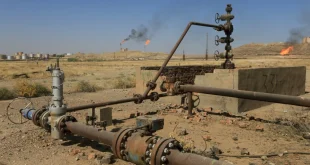
The first pressure point is infrastructural capacity. Iran’s oil and gas system depends on a narrow set of exposed assets. Iran produces about 3.3 million barrels per day of crude and 1.3 million barrels per day of condensate and other liquids, with oil production concentrated in Khuzestan and gas output centered in Bushehr around South Pars. It also noted that roughly 90 percent of Iran’s crude exports move through Kharg Island and then through the Strait of Hormuz. That concentration gives the state little redundancy. When strikes or credible threats hit a small number of export, refining, and command nodes, they weaken the state’s ability to move energy, sustain industry, and organize repair. A system built around a few critical chokepoints can survive disruption only if it has spare routes, spare capital, and rapid repair capacity. Iran has limited amounts of all three.
The second pressure point is fiscal capacity. States survive by converting assets into predictable revenue. Iran still exports oil, but sanctions had already forced it to depend on discounted sales, a narrow customer base, and fragile shipping arrangements. Iran accumulated record levels of crude and condensate on tankers at sea as a hedge against possible disruption. A government that cannot rely on steady export flows loses control over budget timing, subsidy planning, import financing, and emergency spending. The World Bank’s latest outlook already projected that Iran’s economy would contract in fiscal year 2026–27 as sanctions and trade restrictions tightened. The strikes make that outlook worse by increasing the risk premium on transport, insurance, and settlement. As revenue becomes less reliable, the state struggles to pay wages, repair damaged infrastructure, import essential inputs, and contain price shocks.
The third pressure point is logistical capacity. After the strikes and Iran’s retaliation, commercial airspace over Iran, Iraq, Kuwait, Israel, and Bahrain largely emptied as airlines across Europe, the Persian Gulf, and Asia suspended or rerouted flights. That matters for more than passenger travel. It shows how quickly conflict can disrupt transport coordination, insurance calculations, and regional movement. In a sanctioned economy, the state already faces difficulty securing industrial inputs, moving goods, and absorbing delays at acceptable cost. When war complicates transport and raises transaction costs across the region, the government must spend more effort to move fewer goods. That reduces its ability to manage supply chains, stabilize markets, and maintain routine administration. States fail not only when they lose territory, but also when they lose the logistical ability to make ordinary systems work.
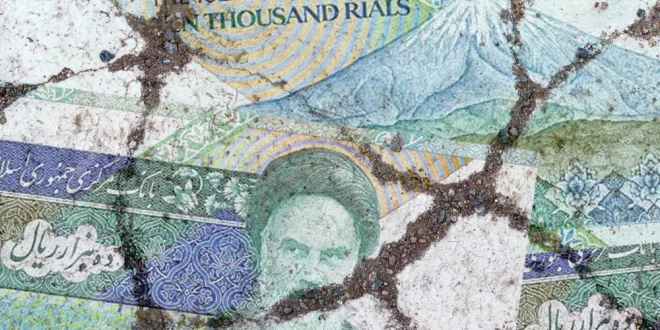
The fourth pressure point is administrative capacity. The Iranian rial lost nearly half its value in 2025. In January 2026, protests spread as traders saw formal institutions as ineffective while more securitized networks dominated key sectors of the economy. When ministries no longer can stabilize prices, regulate commerce, or allocate scarce resources consistently, the state governs less through routine administration and more through improvisation. External military pressure usually deepens that trend. Under attack, Tehran will prioritize security management and emergency control rather than rebuilding civilian bureaucratic capacity.
Under attack, Tehran will prioritize security management and emergency control rather than rebuilding civilian bureaucratic capacity.
The fifth pressure point is service-delivery capacity. Even before the air strikes, the World Bank had warned that Iran’s energy shortages, water stress, and infrastructure weaknesses were disrupting economic activity. The latest attacks increase those burdens. When export revenues weaken, transport becomes costlier, and more state resources shift toward crisis response, the government has less room to cushion food-price spikes, medicine shortages, electricity disruption, and repair costs. States rarely lose every function at once. They weaken when they stop performing ordinary functions reliably. Hospitals still operate, but with fewer supplies. Markets still open, but with less stability.
Ministries still issue orders, but with weaker implementation. That is how state failure advances in practice: through the steady erosion of routine capacity rather than one dramatic collapse.
Iran, therefore, does not need to experience immediate regime collapse to move deeper into failed-state dynamics. The key question is not whether the state can still coerce. It is whether it can still govern effectively. After February 28, 2026, that capacity looks weaker. The strikes damaged concentrated infrastructure, tightened fiscal pressure, disrupted logistics, and pushed the state toward more reactive and less effective administration. The regime may still hold the center, but holding the center is not the same as maintaining state capacity. If this trajectory continues, Iran may remain politically intact while becoming fiscally thinner, administratively weaker, and functionally less capable. That is how states begin to fail. https://www.meforum.org/mef-observer/is-iran-heading-to-state-failure

![This handout image taken by the European Space Agency, captured by the Copernicus Sentinel-2 satellite, shows a view of Iran's Kharg island. [AFP]](https://uskenergy.com/wp-content/uploads/2026/03/Representational-Image-2026-03-14T174826.509-2026-03-cfb0244d80bdb96caafe790a619f1ef9-310x165.avif)