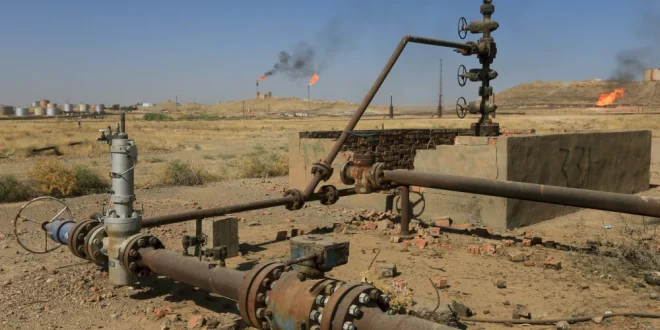
Disputes Between Baghdad and the Kurdistan Region May Limit Demand for Northern Iraqi Crude
On March 17, 2026, Iraq’s federal government and the Kurdistan Regional Government agreed to resume crude exports through the northern segment of the Iraq-Turkey Pipeline to Turkey’s Mediterranean port of Ceyhan. By March 18, shipments had commenced, with initial flows of 150,000–250,000 barrels per day from Kirkuk fields and potential additions from Kurdistan Region Government-operated assets.
Baghdad reached this agreement under severe pressure. Escalating conflict involving Iran has effectively disrupted the Strait of Hormuz, sharply reducing Iraq’s southern exports and cutting national production from approximately 4.3 million barrels per day to around 1.3–1.4 million barrels per day. Iraqi authorities, therefore, moved to activate the only viable northern export route.
Escalating conflict involving Iran has effectively disrupted the Strait of Hormuz, sharply reducing Iraq’s southern exports and cutting national production.
Oil markets reacted quickly. Brent crude eased to around $103 per barrel, while West Texas Intermediate declined more sharply, reversing gains driven by Hormuz-related fears. Traders interpreted the restart as a supply increase and a partial bypass of Persian Gulf disruption. This interpretation overstates the impact. The pipeline’s resumption reflects a geopolitical workaround, not a durable expansion of supply.
The Iraq-Turkey Pipeline long has functioned as both infrastructure and leverage. Built in the 1970s, the Kirkuk-Ceyhan system enabled Iraq to diversify exports beyond the Persian Gulf. In 2013, the Kurdistan Regional Government began exporting crude independently through a feeder line connecting to the pipeline, bypassing Baghdad’s State Oil Marketing Organization (SOMO). Iraq challenged this move and initiated arbitration at the International Chamber of Commerce. In March 2023, the tribunal ruled in Baghdad’s favor, ordering Turkey to pay approximately $1.5 billion in damages and confirming SOMO’s exclusive authority over exports through Ceyhan.
Turkey halted flows following the ruling, shutting northern exports for more than two years. A U.S.-brokered arrangement in 2025 enabled limited resumption under SOMO control, with flows reaching roughly 230,000 barrels per day before disputes disrupted operations again. By early 2026, disagreements over payments, security guarantees, and authority halted exports entirely.
The March 17 agreement does not resolve these disputes. Kurdish officials continue to demand access to hard currency, infrastructure protection, and guarantees for international oil companies. Baghdad rejects linking exports to broader fiscal or political concessions and maintains federal authority over oil policy. These opposing positions create immediate operational risk.
Any disruption, political or security-related, can halt flows.
The current route depends on infrastructure crossing Kurdistan Regional Government-controlled territory. Any disruption, political or security-related, can halt flows. Militia activity targeting northern energy infrastructure increases this vulnerability. At the same time, Baghdad has moved to revive a direct Kirkuk-Ceyhan link that bypasses Kurdistan Regional Government territory, signaling persistent mistrust.
Turkey holds leverage. Ankara controls the Ceyhan terminal, storage, and loading operations and has repeatedly suspended flows when conditions shift. The governing legal framework adds further uncertainty. The Iraq-Turkey pipeline agreement, signed in 1973 and later renewed, expires on July 27, 2026. Turkey has signaled dissatisfaction and seeks revised terms that ensure higher utilization and broader integration of energy infrastructure.
Turkish officials have indicated that any new agreement could include expanded capacity targets exceeding one million barrels per day, alongside integration of gas and downstream projects. Ankara also retains leverage through unresolved arbitration issues. The 2023 International Chamber of Commerce ruling remains partially unsettled, and a second arbitration covering post-2018 exports remain pending. Turkey can use these disputes to extract concessions or delay normalization.
Legal uncertainty continues to constrain market confidence. The International Chamber of Commerce ruling established SOMO’s exclusive authority over exports through Ceyhan. Any deviation risks renewed arbitration or commercial hesitation. Traders and refiners require legal clarity before lifting cargoes. Ongoing disputes between Baghdad and the Kurdistan Region complicate this process and may limit demand for northern Iraqi crude.
Even under favorable conditions, the pipeline’s contribution to global supply remains limited. Initial flows of 150,000–250,000 barrels per day represent only a fraction of Iraq’s lost southern exports and a negligible share of global demand. Northern exports eventually may reach 400,000–450,000 barrels per day, but this volume remains marginal in a market consuming roughly 100 million barrels per day. By contrast, disruptions in the Strait of Hormuz affect 15–20 million barrels per day of global flows.
The pipeline adds only marginal supply and remains exposed to multiple points of failure.
Operational constraints further limit output. Infrastructure degradation, security risks, and political fragmentation slow ramp-up timelines. Analysts already have warned that supply relief will remain limited and vulnerable to disruption. Previous disruptions of similar scale produced minimal long-term price impact.
The market reaction to the March 17 announcement reflects headline-driven trading rather than structural analysis. Traders interpreted the restart as a reduction in supply risk, prompting a modest price decline. However, the underlying geopolitical risks remain unchanged. The pipeline adds only marginal supply and remains exposed to multiple points of failure.
Any renewed dispute between Baghdad and Kurdish authorities in Erbil, delay in Turkish negotiations, or escalation of militia activity could halt flows again within weeks. Investors who assume sustained additional supply underestimate the volatility embedded in the system. If flows falter, prices could quickly rebound. The agreement highlights Iraq’s continued vulnerability to regional instability and internal fragmentation. It also underscores the influence of transit states and subnational actors in shaping energy flows. The restart offers temporary relief but does not provide a structural solution to Iraq’s export constraints.
A durable outcome would require a comprehensive settlement between Baghdad and the Kurdish region, full implementation of arbitration rulings, and a renegotiated pipeline agreement with Turkey. None of these conditions appears imminent before the July 2026 deadline. Until then, the Iraq-Turkey Pipeline will function as a fragile workaround, rather than a reliable supply channel. Markets should treat the restart as a geopolitical signal, not a supply inflection point.


![This handout image taken by the European Space Agency, captured by the Copernicus Sentinel-2 satellite, shows a view of Iran's Kharg island. [AFP]](https://uskenergy.com/wp-content/uploads/2026/03/Representational-Image-2026-03-14T174826.509-2026-03-cfb0244d80bdb96caafe790a619f1ef9-310x165.avif)