Tuesday , March 3 2026

Energy Market

Will Qatar Maintain Its Liquefied Natural Gas Edge After an Iran War?

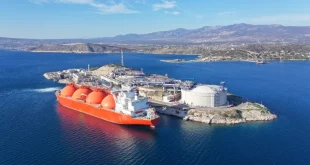
A liquified natural gas tanker and tugs sail to the terminal.Shutterstock

Doha Converted Gas Revenue Into Global Influence and Marketed Itself as the Supplier That Delivers Even During Turbulence Qatar reads Iran-U.S. tensions through the blunt logic of self-preservation. Doha worries less about “regional instability” than about losing the conditions that let it build an liquefied natural gas empire with limited regional contestation. …

Read More »

Venezuela’s Return to Oil Markets Enhances Israel’s Energy Security

Oil drums are marked with the flag of Venezuela.Shutterstock

Changes in One Producer’s Political and Economic Conditions Can Ripple Across Global Energy Markets On February 10, 2026, Bloomberg reported that traders shipped Venezuelan crude oil to Israel’s Bazan Group, the country’s largest refinery operator in Haifa. The cargo marks the first Venezuelan delivery to Israel since mid-2020, when Israel imported approximately …

Read More »

As China’s Teapot Refiners Turn Toward Iranian Oil, Sanctions’ Effectiveness Suffers

An Iranian banknote with a portrait of Ruhollah Khomeini and a gold model of an oil pump.Shutterstock

Importers Benefit, but Transparency Suffers, and Price Gaps Widen with the Spread of Cheap Sanctioned Oil China’s independent refiners, known as “teapots,” increasingly are replacing Venezuelan crude with Iranian oil. This shift shows how sanctions pressure, commercial reality, and geopolitics now shape global oil flows more than formal rules. As U.S. enforcement …

Read More »

Why ‘Maximum Pressure’ Hasn’t Crippled Iran’s Oil Sector

Despite aggressive sanctions expansion since 2018, Iran’s crude production has stabilized in 2026.Shutterstock

Iran’s Sanctions-Evasion Infrastructure Has Become Systematic Rather than Improvised In early February 2025, President Donald Trump issued National Security Presidential Memorandum 2 (NSPM-2), formally reinstating his “maximum pressure” campaign against Iran. The directive sought to deny Tehran any path to nuclear weapons, constrain its ballistic missile program, and dismantle support for regional proxies by …

Read More »

Why Iran’s Oil Workers Have Not Struck

A Fragmented Labor Force, Strict Security, and Other Factors Constrain Workers from Mobilizing, Not Apathy or Ignorance Iran’s latest wave of unrest has revived the expectation that sustained protests eventually will reach the oil sector and choke off the regime’s primary revenue stream. That escalation has not occurred. The absence …

Read More »

Iran’s Desalination Pipeline Is More Stopgap Than Solution

The project fits a long-standing pattern in Iran of improvisation rather than reform On December 6, Iran’s President Masoud Pezeshkian unveiled the country’s latest attempt to mitigate chronic water shortages: an 800-kilometer pipeline carrying desalinated water from the Gulf of Oman to drought-stricken Isfahan. The two-year, 350 trillion rial (about $300 million) …

Read More »