The question facing Iran’s steel and cement industries this winter is not simply whether their gas supplies are cut, but how much they can continue producing afterward.
Iran faces a peak gas deficit of about 430 million cubic meters daily, compared with 300 million before US-Israeli strikes damaged its energy infrastructure.
Households take priority, but how much of the shortfall will fall on either industry remains uncertain.
Cement needs heat, which can come from alternative fuels. Much of Iranian steelmaking, however, needs gas to transform iron ore itself.
A cement factory that loses natural gas may still have a working kiln tomorrow. A steel plant that loses the gas feeding its iron-reduction unit may not.
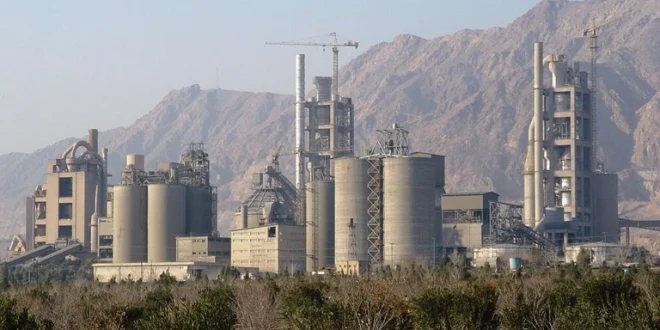
Cement: The challenge of getting fuel
Iran’s grey-cement producers were receiving only five to eight million cubic meters of gas daily against normal industry demand of 28 million before losing the remainder in late October, according to Tasnim. Most had already turned to mazut, a heavy fuel oil.
Iran nevertheless produced 6.44 million tonnes of clinker in October. That provides a baseline before the cutoff, not evidence that production continued at the same rate afterward.
Using the International Energy Agency’s energy benchmark, maintaining October’s clinker output without gas would require approximately 19 million liters of mazut daily, equivalent to about 760 deliveries by 25,000-liter tankers.
These are estimates, not forecasts. Kilns differ in efficiency, and the fuel must actually arrive. Losing 200 tanker deliveries would mean losing enough heat to produce roughly 54,000 tonnes of clinker daily, assuming no backup fuel.
Cost is another obstacle. Tasnim reported mazut transport charges of 2,000–2,500 tomans per liter. At 19 million liters, trucking alone would cost 38–47.5 billion tomans daily, excluding fuel purchases. Power plants also compete for the same tankers and mazut.
Iran International reported that 22 cement factories stopped their kilns in December 2024. Tehran Cement could not burn mazut because of pollution restrictions near populated areas. A 2026 report described Lamerd Cement operating at around 60 percent of capacity over the preceding two years because its distance from fuel suppliers made reliable mazut deliveries uneconomic.
Having an alternative fuel, in other words, does not guarantee that a factory can use it.
Cement can outlast its kilns, briefly
Even when a kiln stops, a grinding mill can turn stored clinker into finished cement, provided electricity remains available. This can conceal the scale of disruption.
In July, clinker production fell nearly 39 percent year-on-year, while cement production rose 5 percent.
October cement output averaged approximately 214,000 tonnes daily. Assuming clinker accounts for 80 percent of finished cement, sustaining that rate with every kiln stopped would consume about 171,000 tonnes of stored clinker each day.
At that pace, one million tonnes of accessible clinker would last fewer than six days. Maintaining production for a month would require more than five million tonnes. National inventories are not publicly verified.
October’s exports included 668,000 tonnes of cement and 285,000 tonnes of clinker, adding to competition for available supplies. Slower production can stretch stocks but reduces sales, while electricity shortages can stop grinding mills even sooner.
Steel: Gas is an ingredient
Iran’s electric-furnace steel industry is particularly exposed because much of it relies on direct-reduced iron, also known as sponge iron.
In these plants, natural gas is converted into hydrogen and carbon monoxide to remove oxygen from iron ore.
Iran produced about 14 million tonnes of sponge iron during January–June 2026. Using a published benchmark of 265 cubic meters of gas per tonne of sponge iron, maintaining that production rate would require approximately 20.5 million cubic meters of gas daily.
A daily gas reduction of five million cubic meters could put roughly 19,000 tonnes of sponge-iron production at risk; a ten-million-cubic-meter cut could put 38,000 tonnes at risk.
These are estimates of potential exposure, not predictions of actual production losses.
Plants also cannot necessarily operate at half capacity when their gas supply is halved. Iron-reduction units require specific gas flows, temperatures and chemical conditions. Below certain levels, an entire unit may have to shut down.
Where the alternatives run out
Steelmakers can keep their furnaces running for a time by using stored sponge iron, purchasing other iron materials or increasing their use of scrap metal. Iran’s smaller blast-furnace operations also rely on a different production process.
Replacing just ten days of Iran’s recent sponge-iron output would require around 770,000 tonnes of suitable material. Finding that much would be difficult when supplies are tight, prices are high and electricity shortages are already disrupting operations.
Some steel production could therefore continue after gas supplies are cut, but maintaining normal output would become difficult as available materials run low.
Cement producers have more flexibility, but their experience shows that fuel substitution depends on delivery, cost and permission to burn alternative fuels. Neither industry’s losses can be reliably forecast without knowing how much fuel and material individual factories have in reserve.
Both industries may continue producing after gas supplies are cut, but their output will depend on the availability and cost of alternative fuels and raw materials.
What matters this winter is not simply whether factories remain open, but how much they can produce, at what cost and for how long.