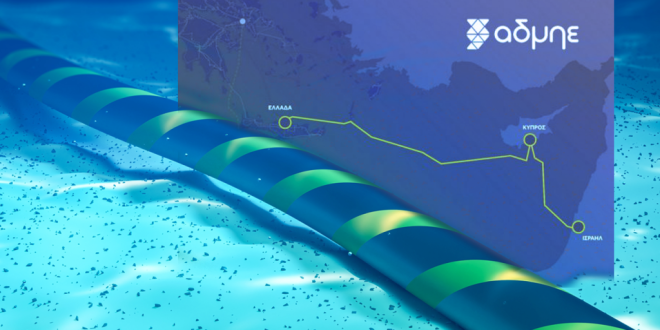
A seabed survey is usually an engineering step. For the Great Sea Interconnector (GSI), it has become a test of how far Greece, Cyprus and Türkiye can manage their maritime dispute without letting it derail a major infrastructure project.
In mid-October 2026, the GSI developer applied to resume surveys for the planned undersea electricity cable linking Greece and Cyprus, with a possible extension to Israel. Türkiye says the survey area overlaps with claims set out in its 2019 maritime agreement with Libya. Greece says it can proceed. The application has brought that agreement back into focus because someone must map the seabed before the cable route can be finalized and the parties disagree over who has the right to do so.
The project has a clear purpose for Cyprus. It is the only EU member state without an electricity connection to the continental grid. The first phase would link Greece, via Crete, to Cyprus along an 898-kilometre route, with a planned capacity of up to 1,000 megawatts. If completed, the connection could give Cyprus another source of electricity, allow it to export surplus power and make it easier to integrate renewable generation into its isolated grid. The EU has committed €657 million through its Connecting Europe Facility.
Greece would gain a stronger position in regional electricity trade. A later extension to Israel could widen the network, although that is not part of the immediate Greece–Cyprus link. US officials have backed the project as a way to diversify energy connections amid the war in Ukraine and instability around the Strait of Hormuz.
That case for diversification needs a clear boundary. The GSI is an electricity interconnector; it will not carry oil or gas, and it cannot bypass Hormuz. It could give Cyprus another way to access electricity from a connected market. It cannot replace hydrocarbon supplies or guarantee that power will be available during a regional crisis. Its value will depend on how much electricity is available to exchange, how well the grids are connected and whether the cable remains operational.
Building digital resilience: Qatar, Iraq and the new Gulf–Europe fibre corridor
The route is where engineering meets diplomacy
Greece’s Independent Power Transmission Operator, IPTO/ADMIE, is developing the roughly 1,200-kilometre project. French contractor Nexans has applied for permission to resume seabed surveys on the developer’s behalf. Greek approvals and a maritime notice are still required. Around 60 percent of the survey work has been completed; the outstanding section lies in disputed waters. The completion estimate has moved from around 2030 to early 2031.
Greece and Cyprus say the route is within their maritime rights and that Türkiye has no legal basis to stop the work. The EU supports the project and maintains that the Türkiye–Libya memorandum infringes the rights of third states and does not comply with the law of the sea. Türkiye rejects the EU’s assessment.
It argues that parts of the proposed route overlap with its continental-shelf claims and the 2019 agreement. These are competing legal positions; the survey application does not settle them.
There may, however, be room for a practical arrangement. On 22nd October, Turkish Foreign Minister Hakan Fidan said Türkiye did not oppose the surveys if it received written notice, including the coordinates of the planned work. That could help prevent a misunderstanding at sea. Whether it will be enough for Greece and the project’s other partners to proceed remains uncertain, and notification would not resolve the underlying claims.
Libya’s recent move has complicated the picture. The 2019 agreement was signed by Türkiye and Libya’s then Government of National Accord in Tripoli. On 20th October, Libya’s eastern-based House of Representatives approved it, reversing its earlier opposition.
Greece rejected the decision as legally ineffective, while Türkiye welcomed it. The vote gives the agreement broader political backing within Libya, but it does not settle its international legal status or remove the objections of Greece, Cyprus, Egypt and the EU.
This shift matters because it makes it harder to dismiss the memorandum as an arrangement supported only by Libya’s western authorities. At the same time, Libya’s divided political institutions and the disagreement among regional states make it harder to see a quick diplomatic settlement. The EU is both a major funder of the cable and an outspoken critic of the maritime agreement. Its support gives the project weight, but also places it squarely within the wider political dispute.
Overland lifelines under pressure: Iran’s trade with its neighbours
War adds urgency and another layer of risk
The war in the Middle East has made the GSI’s diversification argument more compelling. Shipping disruptions and tension around Hormuz have reminded governments that energy markets remain vulnerable to events far beyond their borders. A connection between Cyprus and the European electricity system could offer more flexibility. It would not shield the project or the connected countries from conflict.
The war can affect construction through practical channels. Reuters has reported sharp increases in maritime insurance premiums and shipping costs since the conflict widened. Those reports concern vessels operating in the region; they do not establish that GSI survey or cable-laying vessels have already faced higher premiums. But if insurers judge those operations riskier, coverage could become more expensive or restrictive. Extra security measures could add costs, while an incident or prolonged delay could push the project further behind schedule.
Even without conflict, a subsea cable of this length is technically demanding. The route must be mapped in detail, installation requires specialist vessels, and converter stations must connect the cable to the grids at each end.
Once the link is operating, maintenance and repair capacity will matter: an interconnector improves resilience only if faults can be addressed promptly. Delayed surveys can hold up design decisions and construction planning as well as the cable itself.
The financing plan will face a harder test
The EU’s €657 million grant is substantial, but it covers only part of the investment. The remaining costs are expected to be shared through national contributions, private investment and regulated cost recovery. Under the current allocation, Cyprus would bear about 63 percent of capital costs and Greece 37 percent. French investor Meridiam has taken a 66 percent stake in the project company; IPTO holds the remaining 34 percent. That brings in a private partner, but it does not guarantee that investors will pay for overruns.
The €1.9 billion estimate is already in question. Cyprus’s finance minister has warned that the final cost could be significantly higher and that additional funding may be needed. He has also questioned whether the project will reduce electricity costs enough to justify the investment. If the total rises, governments will need to identify who pays the difference through new financing, public contributions, borrowing or higher regulated charges.
Cyprus has made some payments conditional on progress. Its commitment includes annual payments of €25 million for five years, capped at €125 million, and officials have linked the first payment to a notice confirming that surveys are resuming. Consumers are expected to pay through regulated charges once electricity begins flowing. That delays the impact on bills, but it does not mean the project will lower prices. If construction costs rise, consumers in Cyprus and Greece may ultimately shoulder part of the increase. The surveys should help clarify technical requirements, but until they are complete, €1.9 billion should be treated as a working estimate rather than a final bill.
Beyond shared identity: Military cooperation across the Turkic states
A narrow path forward
The GSI could give Cyprus a valuable link to Europe and create new opportunities for electricity exchange. But the project’s benefits are not automatic: they depend on completing the cable, keeping it reliable and paying for it on terms governments and consumers can sustain.
The next step is to make the surveys possible without turning them into a contest of resolve. Advance notice, clear coordinates and direct communication could reduce the risk of a confrontation while leaving the legal dispute for diplomacy. The project’s sponsors also need to publish credible cost updates and make clear how overruns would be shared.
If survey work resumes safely and the funding plan holds up under scrutiny, the GSI could become a useful addition to Eastern Mediterranean electricity infrastructure. If the route remains a recurring flashpoint or the final cost rises without a transparent plan, political support may weaken. The cable’s prospects rest on engineering and finance but also on whether the states involved can manage their disagreement without letting it block the work.