Current throughput at 2.2 million barrels a day is well below the 5.5 million flowing daily before the Houthi attack, full recovery may take at least six weeks.
New Delhi: Saudi Arabia’s East-West oil pipeline has resumed operations after an 11-day shutdown following Houthi drone attacks, but crude flows have recovered to only around 2.2 million barrels per day (b/d), or 40 percent of the roughly 5.5 million b/d that was flowing before the Houthi attack, according to energy analysts.
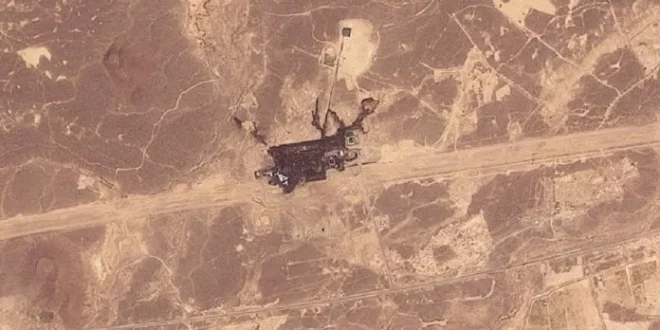
The pipeline, also known as Petroline, has a total expected capacity of around 7 million b/d. However, analysts said restoring flows to 5.5–6 million b/d could take several weeks as Saudi Arabia repairs damaged pumping stations and rebuilds the pressure needed to move larger volumes.
Natalia Katona, a commodity analyst based in Abu Dhabi, said loading operations at Yanbu, the Red Sea port connected to the pipeline, stopped on 11 September, immediately after the pipeline was hit.
“All loadings shifted to Ras Tanura port in the Persian Gulf. After roughly 11 days with no activity, a Very Large Crude Carrier (VLCC) cargo was loaded on 21 September heading to Suez Canal, followed by a Pakistan-bound small Aframax cargo on 22 September,” Katona told ThePrint.
“Loadings have become more visible since 23 September and are now running at around 700,000 b/d,” she said.
Katona estimated that refinery runs along Saudi Arabia’s Red Sea coast are currently around 1.5 million b/d. Adding the current export loadings of around 700,000 b/d gives an estimated East-West pipeline throughput of approximately 2.2 million b/d.
This means current flows are around 40 per cent of the roughly 5.5 million b/d pre-crisis flow. The recovery is expected to take time because the attack damaged pumping stations needed to maintain pressure across the pipeline. “Restoring flows to 5–6 million b/d will reportedly take around six weeks,” Katona said.
Umud Shokri, an energy strategist and geopolitical analyst based in the US, said the East-West pipeline restarted around 22 September after a roughly 11-day shutdown triggered by drone attacks on pumping stations.
“The East-West pipeline restarted operations around 22 September, after a roughly nine-to-eleven-day shutdown triggered by drone attacks on pumping stations,” Shokri told ThePrint. “Full capacity restoration is expected to take 6 to 8 weeks according to security and industry sources.”
Saudi Arabia still dependent on Gulf route
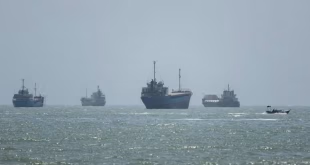
The pipeline shutdown forced Saudi Arabia to rely more heavily on Gulf terminals such as Ras Tanura to move its crude. This has increased the importance of the Strait of Hormuz at a time when shipping through the waterway remains subject to significant disruption.
Katona said Saudi Arabia has been loading as much crude as possible from its Gulf terminals to prevent its storage facilities from reaching capacity.
“By loading in the Gulf and chartering tankers to transit their crude oil out of the Gulf, they are inadvertently pushing up the freight prices to unprecedented levels for everyone, including themselves,” she said.
According to Katona, the large volumes being loaded at Ras Tanura mean Saudi Aramco is having to move exports out of the Gulf at its own risk, adding around $15–20 a barrel to the cost. She said Saudi Aramco has sold more than 60 million barrels for loading outside the Gulf since the East-West pipeline was attacked, although only a fraction of those volumes has so far transited the Strait of Hormuz.
However, the higher Saudi export volumes have not led to a sustained decline in global oil prices because of uncertainty over whether these barrels can actually move out of the Gulf. “The reason why this hasn’t really triggered a downward push for oil prices is that the market doesn’t necessarily believe these volumes can easily get out from the Hormuz,” Katona said.
Oil prices remain elevated
The pipeline’s partial restart initially pushed Brent crude down by more than $2 a barrel towards the high $90s, Shokri said. However, prices have remained elevated amid continued disruption around the Strait of Hormuz and wider supply risks in the Middle East.
Brent crude prices crossed $106 a barrel on Monday amid uncertainty over the Strait of Hormuz and after US President Donald Trump rejected Iran’s seven-point plan.
Under this scenario, the opening of the pipeline is significant for major Asian oil importers, including India, as the East-West pipeline provides Saudi Arabia with an alternative route that bypasses the Strait of Hormuz and moves crude to its Red Sea coast.
Shokri said the restart could benefit major Asian importers, as well as European refiners dependent on routes through Egypt’s SUMED (Suez-Mediterranean) pipeline, by improving supply flexibility and reducing some of the supply risks created by the disruption. For Saudi Arabia, however, the immediate task remains restoring the pipeline to higher operating levels and reducing its dependence on Gulf export routes.
(Edited by Nardeep Singh Dahiya)

![Numerous merchant ships belonging to Iran and other countries remain at anchor in the Strait of Hormuz in Bandar Abbas, Iran, on September 10, 2026. [Fatemeh Bahrami – Anadolu Agency]](https://uskenergy.com/wp-content/uploads/2026/10/Hormuz-310x165.webp)