No serious policymaker should want an open-ended confrontation in the Strait of Hormuz, but a deal that rewards Iran for closing or restricting the strait would create a long-term problem in exchange for short-term calm
The Strait of Hormuz remains one of the world’s most important maritime chokepoints. In normal conditions, roughly 20-21 million barrels per day of crude oil and petroleum products pass through it, equal to about one-fifth of global petroleum liquids consumption and around one-quarter of seaborne oil trade. Significant volumes of liquefied natural gas also move through the same route.
Saudi Arabia, Iraq, the UAE, Iran, and Kuwait rely heavily on Hormuz for exports, while Asian economies, especially China, India, South Korea, and Japan, remain among the main destinations.
That dependence is what gives the strait its political weight. When traffic through Hormuz slows, the effect is not limited to the Gulf. Insurance rates rise, oil prices move, importers look for alternatives, and governments begin calculating how much disruption they can absorb before a maritime crisis becomes an economic one.
The 2026 Crisis
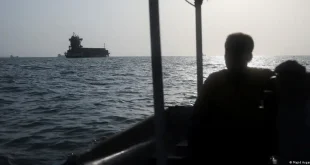
In early 2026, following US and Israeli strikes on Iran beginning around February 28, Iran moved to close or severely restrict the strait. Tehran declared it closed on March 4, threatened commercial vessels, and reportedly imposed “security tolls” that some accounts placed as high as $1-2 million per tanker. Shipping traffic fell sharply. Several vessels were reportedly attacked, threatened, or diverted, while insurance costs climbed and energy markets reacted to the uncertainty.
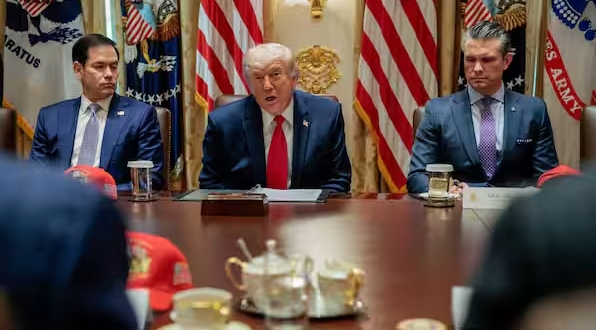
By mid-2026, fragile ceasefires and negotiations were still underway. President Donald Trump has claimed progress toward a deal that could reopen the strait and include sanctions relief or other financial concessions, while Iran has continued to frame its role in Hormuz as a matter of control and security.
The danger is not diplomacy itself. Reopening Hormuz is clearly in the interest of the United States, Gulf producers, Asian importers, and the broader global economy. The problem is what Washington may be asked to trade for it. If sanctions relief, frozen assets, or tacit acceptance of Iranian “management” fees are exchanged for safe passage, the result would look less like de-escalation and more like a reward for maritime coercion.
By mid-2026, fragile ceasefires and negotiations were still underway. President Donald Trump has claimed progress toward a deal that could reopen the strait and include sanctions relief or other financial concessions, while Iran has continued to frame its role in Hormuz as a matter of control and security.
The danger is not diplomacy itself. Reopening Hormuz is clearly in the interest of the United States, Gulf producers, Asian importers, and the broader global economy. The problem is what Washington may be asked to trade for it. If sanctions relief, frozen assets, or tacit acceptance of Iranian “management” fees are exchanged for safe passage, the result would look less like de-escalation and more like a reward for maritime coercion.
Why Concessions Would Be Risky
The first risk is a moral hazard. A deal that rewards closure would teach Tehran that threatening Hormuz produces results. The same tactic could return during future disputes over nuclear talks, sanctions enforcement, proxy activity, or US military pressure. The lesson would not stop with Iran. Other powers could draw their own conclusions in the South China Sea, the Taiwan Strait, the Black Sea, or other contested maritime spaces. Hybrid maritime coercion is attractive precisely because it can create global pressure while staying below the threshold of full-scale war.
The second risk is damage to deterrence. US policy has long treated freedom of navigation as a core interest. If Washington responds to a blockade by paying politically or economically for reopening, it weakens the credibility of future warnings. Allies that depend on Gulf energy would see that the United States can be forced into concessions when markets hurt enough.
The third risk is economic. Even after the strait reopens, markets would not simply forget the episode. Insurers, traders, and importers would price in the possibility that Iran could repeat the tactic. If “vetting” agencies, informal fees, or security payments become part of the shipping environment, the strait may be technically open while still operating under coercive pressure.
The fourth risk is linkage. If Hormuz reopening is separated from nuclear limits or regional restraint, Iran could gain economic relief without making durable concessions on the issues that helped trigger the confrontation. That would strengthen the regime financially while leaving its nuclear programme, missile capabilities, and proxy networks largely unresolved. Regional allies such as Saudi Arabia, the UAE, and Israel would likely read such an outcome as a sign of U.S. weakness. That could push them toward more independent security policies, deeper hedging, or expanded military programmes of their own.
The Case for a Deal
There is a serious counterargument. Energy markets cannot absorb prolonged disruption in Hormuz without wider costs. Asian importers are especially exposed, and even countries far from the Gulf feel the effects through fuel prices, inflation, and shipping costs. A narrow “open for open” arrangement could also reduce immediate danger without pretending to solve every dispute with Iran. If both sides step back, shipping resumes, and broader talks continue separately, the result may be preferable to open-ended military escalation.
Iran also suffered during the crisis. Its own exports were disrupted, its military assets were targeted, and the costs of confrontation grew. That gives Tehran some reason to accept de-escalation. But there is a difference between de-escalation and payoff. A temporary arrangement to restore navigation is one thing. Sanctions relief or recognition of Iranian transit controls in exchange for reopening the strait is another. The first reduces risk. The second validates the tactic that created the risk.
Policy Recommendations
A sound US approach should start with a simple principle: access to Hormuz cannot be treated as something Iran may sell back to the world after threatening it. First, Washington should sustain freedom of navigation operations with partners. Escort missions, mine-clearing capabilities, surveillance, and targeted responses to imminent threats should continue until commercial traffic can move without intimidation.
Second, any sanctions relief should be tied to verifiable nuclear and regional commitments, not merely to maritime access. Hormuz should not become a separate bargaining chip that Iran can close, reopen, and monetise during every crisis. Third, the United States and its partners should reject tolls, discriminatory controls, or Iranian-linked “vetting” systems as illegitimate. Even informal acceptance would make the practice harder to challenge later.
Fourth, Gulf producers and major importers should accelerate alternatives where possible, including pipelines, storage capacity, LNG flexibility, and diversified supply routes. These options cannot replace Hormuz fully, but they can reduce the leverage created by a single chokepoint. Finally, Washington should coordinate more closely with Europe, Gulf states, and Asian importers. The cost of securing Hormuz should not fall only on the United States, especially when so many economies depend on the route.
Conclusion
Diplomacy is preferable to a prolonged maritime crisis. No serious policymaker should want an open-ended confrontation in the Strait of Hormuz. But a deal that rewards Iran for closing or restricting the strait would create a long-term problem in exchange for short-term calm. The issue is precedent. If a state can threaten a global trade artery and receive concessions for restoring access, the tactic becomes more attractive, not less. Iran would remember the lesson. So would others. The United States and its partners should work to reopen Hormuz, but not by legitimising coercive control over it. The strait is too important to become a toll booth for geopolitical pressure.