Iran’s Sanctions-Evasion Infrastructure Has Become Systematic Rather than Improvised
In early February 2025, President Donald Trump issued National Security Presidential Memorandum 2 (NSPM-2), formally reinstating his “maximum pressure” campaign against Iran. The directive sought to deny Tehran any path to nuclear weapons, constrain its ballistic missile program, and dismantle support for regional proxies by targeting Iran’s oil sector, the regime’s primary source of revenue.
Building on Trump’s first-term sanctions, NSPM-2 expanded designations across Iran’s petroleum trade, targeted the country’s “shadow fleet” of sanctions-evasion tankers, and introduced the threat of secondary sanctions on foreign buyers, including a proposed 25 percent tariff on key partners such as China.
Iran’s oil sector remains operational and relevant, exposing the limits of unilateral pressure in a fragmented global energy market.
By collapsing oil exports to zero, Washington expected currency depreciation, fiscal exhaustion, and mounting instability that would force Tehran to concede in negotiations. Nearly a year later, those expectations have not materialized, despite the collapse of Iran’s currency. Iran’s oil sector remains operational and relevant, exposing the limits of unilateral pressure in a fragmented global energy market.
Despite the most aggressive sanctions expansion since 2018, Iran’s crude production has stabilized. Rystad Energy expects Iranian output to be approximately 3.2 million to 3.4 million barrels in 2026. This level exceeds the lows during Trump’s first term, when Iranian production fell below 2 million barrels per day. Even in late 2025, with some months exceeding 2 million barrels per day, Iran generated upwards of $56 billion despite discounted pricing.
One reason sanctions have failed to produce collapse is market context. The International Energy Agency projects a global oil oversupply of roughly 3 million barrels per day in 2025, driven by U.S. shale resilience and spare capacity among international producers. In such conditions, Iranian barrels do not meaningfully threaten price stability. Brent price projections ranging between $55 and $91 per barrel reflect contained geopolitical risk rather than acute supply anxiety. When markets are loose, enforcement loses leverage. Buyers can absorb risk in exchange for discounts.
China sits at the center of this dynamic. In 2025, it absorbed more than 80 percent of Iran’s seaborne crude exports, roughly 1.3 million to 1.4 million barrels per day, accounting for over a quarter of Iran’s total trade. By January 2026, that share approached 90 percent, with Kpler data showing roughly 57 million tons imported during the first ten months of 2025. Iranian crude routinely trades $10-15 per barrel below Brent, making it economically attractive to China’s independent “teapot” refineries, particularly as Venezuelan supplies remain disrupted.
Beijing has treated U.S. threats, including the proposed 25 percent tariff, as manageable. China’s overall crude imports rose to approximately 11.6 million barrels per day in 2025, up 5 percent year-on-year, diluting Washington’s leverage. Iranian oil is often rebranded as Malaysian or Emirati crude, shipped through ship-to-ship transfers, and settled through non-dollar payment mechanisms that blunt secondary sanctions. The twenty-five-year Sino-Iranian cooperation agreement further institutionalizes this trade, allowing Iran to fill gaps created by supply disruptions elsewhere.
Each enforcement cycle prompts adaptation rather than retreat.
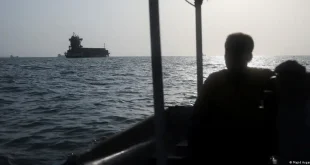
Iran’s sanctions-evasion infrastructure has become systematic rather than improvised. An aging but extensive “shadow fleet” of tankers with disabled transponders facilitates covert shipments, while alternative payment systems, including barter arrangements and informal financial channels, insulate revenues. U.S. enforcement actions, including January 2026 designations of facilitators and vessels, disrupt individual nodes but have not dismantled the network. Each enforcement cycle prompts adaptation rather than retreat.
Domestic unrest has likewise failed to translate into energy disruption. Yet oil production and exports continued largely uninterrupted. Energy infrastructure remains heavily securitized, and Rystad Energy assessments indicate no sustained output halts despite elevated political risk. For now, internal legitimacy crises and oil flows remain decoupled.
By early 2026, NSPM-2 has intensified pressure on Iran but fallen short of its central objective. The oil sector remains operational, export volumes persist through adaptive networks, and revenues continue to sustain the regime’s core functions. Rather than triggering economic collapse, sanctions have reinforced Tehran’s capacity to operate under constraint.
This outcome reflects structural conditions beyond Washington’s control. Global oil oversupply has limited market leverage, China’s continued demand has absorbed sanctioned barrels, and Iran’s sanctions-evasion mechanisms have matured into durable systems. In this environment, unilateral enforcement has proven insufficient to compel strategic change.
NSPM-2 has narrowed Iran’s margins and raised transaction costs, but it has not altered the underlying equilibrium. As long as major buyers remain willing to absorb risk and global energy markets remain flexible, pressure alone is unlikely to produce decisive outcomes.