Energy experts estimate output to rebound within weeks, but it may take months to rebuild shipping confidence and repair damaged energy assets.
New Delhi: The interim US-Iran agreement has paved the way for the reopening of the Strait of Hormuz, but energy market experts caution that oil production and exports from major Gulf producers are unlikely to return to pre-conflict levels anytime soon.
If the agreement holds, some countries may restore output within weeks. However, logistical constraints, shipping disruptions, elevated insurance costs and damage to energy infrastructure could delay a full recovery by months.
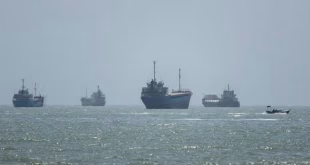
The Strait of Hormuz, through which nearly 20 percent of global oil supplies move, became the central point of the West Asia conflict after Iran restricted maritime traffic following attacks by the US and Israel in February.
The disruption forced Gulf producers to slash output, reroute cargoes and rely on stored inventories.
According to estimates shared by Naveen Das, UK-based senior analyst at global data and analytics firm Kpler, production levels across key Gulf oil producers remain well below their pre-conflict levels.
Saudi Arabia, the world’s largest oil exporter, is currently producing around 7.2 million barrels per day (mbpd), down from 10.5 mbpd before the conflict. The UAE’s production has fallen to 3.3 mbpd from 3.9 mbpd, while Qatar’s output has dropped to 0.2 mbpd from 1.3 mbpd. Iranian production stands at 2.9 mbpd, compared to 4.2 mbpd before the conflict escalated.
However, Das said the pace of recovery will largely depend on whether the US-Iran agreement survives beyond its crucial first 60 days.
“Everything remains contingent on the deal being upheld and the discussions going smoothly for the first 60 days and beyond,” Das told ThePrint. “Without that, we would still see large uncertainty and a limit on the transits via the Strait of Hormuz. Free flows through the Strait are the key to a resumption in production and exports.”
Assuming the agreement remains intact, Das expects Saudi Arabia, the UAE and Qatar to return to normal production levels within roughly six weeks.
Iran is also expected to recover production within four weeks and is expected to see a significant increase in exports with the US rolling back sanctions on the country.
Das estimates Iranian exports could rise by around 2,00,000 barrels per day in the near term to 2 mbpd from the current 1.7-1.8 mbpd. With additional investments, Iran’s oil exports could eventually return to around 2.5 mbpd.
Das also sees the potential for a significant increase in global oil supplies, supported by higher production from the US, Latin America, Iran, the UAE and OPEC+ members. He estimates an additional 2 mbpd of supply could be available by the end of the year compared with pre-war levels.
Despite the prospect of additional supply, Das expects Brent crude to average around $75 per barrel level, arguing that much of the extra output would be absorbed by strategic reserve replenishment, particularly by China.
Hurdles beyond Hormuz
Abu Dhabi-based commodity analyst Natalia Katona of OilPrice.com argues that production recovery could take months as Gulf producers have built up inventories before cutting the output. Thus, the stored crude is likely to be used first once shipping resumes in the region.
“Production will not return immediately,” Katona told ThePrint. “Once shipping resumes, they will probably draw down those inventories before ramping production back up.”
She estimates production normalisation could take between two and three months.
However, shipping disruptions are expected to last longer. Stranded vessels in the Gulf region would need to leave first, while authorities would ensure that the Strait of Hormuz is safe for navigation.
Shipowners are also likely to seek greater confidence in regional security before committing vessels back on to the Gulf routes.
As a result, Katona expects the broader freight market to normalise in three to six months, provided the ceasefire holds.
But, the physical damage to energy infrastructure occurred during the conflict could further delay the recovery.
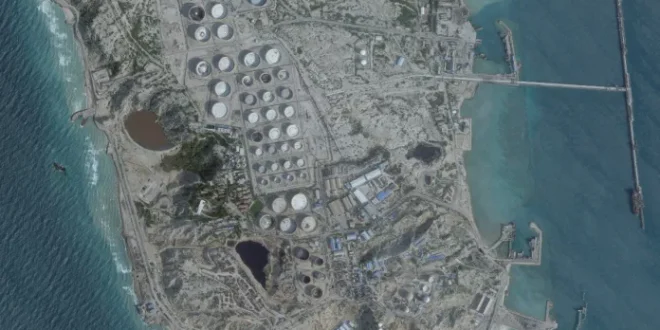
According to Katona, two of Qatar’s 14 LNG trains at Ras Laffan were reportedly destroyed during the conflict and could take two to three years to restore. Also, the damage done to refining infrastructure in Saudi Arabia and Kuwait may not be fully repaired until mid-2027.
US-based energy expert and senior visiting fellow at George Mason University, Umud Shokri, said reopening Hormuz would help clear a backlog of trapped cargoes, but warned that restoring production after prolonged disruptions involves much more than restarting operations.
“Restarting production after shutdowns is not as simple as reopening valves,” Shokri told ThePrint. “Some fields require technical stabilisation, maintenance inspections and careful reservoir management before output can be safely increased.”
He added that export terminals, storage facilities and loading schedules would also need to be reorganised before energy flows return to normal.
Shipowners to remain cautious
Even if maritime traffic resumes, Shokri says that shipowners are expected to remain cautious over the next 60 days. Tanker operators are likely to adopt phased route testing, enhanced security procedures and stricter risk assessments before fully committing vessels to Gulf routes.
Meanwhile, Asian countries that rely heavily on Gulf energy supplies may continue relying on reserves, diversified suppliers and alternative routes until confidence in Hormuz is restored.
According to Shokri, war-risk insurance premiums may decline from crisis peaks, but insurers would require solid evidence of sustained stability in the region before returning premium rates to pre-conflict levels.
“Premiums may decline from crisis peaks, but they are unlikely to return quickly to pre-conflict levels as long as the agreement remains fragile and the risk of renewed disruption in or around Hormuz persists,” he said.
However, if Iran-US negotiations fail within the next 60 days, experts warn that production recovery could stall, tanker traffic could again face disruptions, and freight cost, insurance premiums and oil prices could come under renewed pressure.
For now, energy experts agree that reopening Hormuz could restore the movement of oil cargoes. However, bringing Gulf oil production, exports and energy infrastructure back to pre-conflict levels would take considerably longer, with recovery timelines ranging from a few weeks to several months.

![Numerous merchant ships belonging to Iran and other countries remain at anchor in the Strait of Hormuz in Bandar Abbas, Iran, on September 10, 2026. [Fatemeh Bahrami – Anadolu Agency]](https://uskenergy.com/wp-content/uploads/2026/10/Hormuz-310x165.webp)