Unlike in the Past, This Time the Regime Did Not Sever Access but Instead Degraded Internet Function
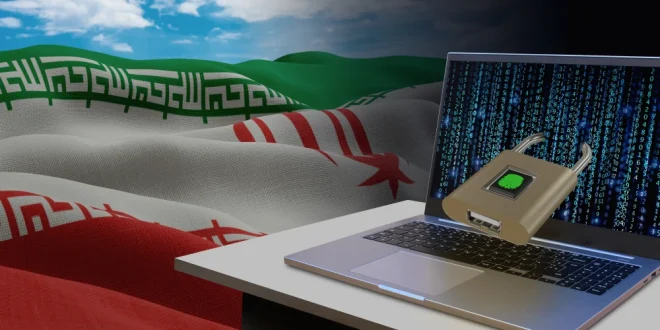
The Islamic Republic of Iran’s internet blackout against the backdrop of the January 2026 protests is fundamentally different from the shutdowns Tehran imposed during earlier rounds of protests in 2019 or 2022. Unlike in the past, when the regime simply unplugged the internet, after the current protests erupted, the regime did not sever access but instead degraded function. Instead of disconnecting gateways, authorities sabotaged the protocols that make the internet usable.
That decision transformed the blackout from a visible act of censorship into a durable instrument of control. Strategically, it allows Tehran to suppress unrest longer, conceal violence more effectively, and avoid the political costs that full shutdowns once imposed. By combining this approach with the ability to unplug the internet locally—as the regime did on January 8 in Kermanshah with a localized crackdown—the regime takes a more multifaceted approach to censorship and online control.
Protocol-level sabotage denies reliable communication without announcing repression.
When connectivity collapsed on January 8, 2026, the regime appeared to have interfered with Domain Name System resolution and disrupted Transport Layer Security handshakes, destabilizing encrypted traffic at the logic layer of the network. Devices remained nominally online, but secure websites failed to load, messaging apps stalled, and virtual private networks collapsed without clear cause.
That ambiguity is deliberate. Protocol-level sabotage denies reliable communication without announcing repression. It slows attribution, complicates monitoring, and fragments international response. Earlier shutdowns produced immediate traffic drops and unified condemnation. This method blends into technical noise. Tehran gains time while outside observers debate diagnostics rather than intent.
The design also sustains itself. Payments degrade, rather than fail. Logistics slow, rather than stop. The state absorbs friction instead of paralysis. That tradeoff explains why the blackout has already exceeded two hundred hours, outlasting most previous disruptions without triggering the escalation pressure that earlier shutdowns generated.
The regime also recalibrated how it targets circumvention. Instead of blocking VPN endpoints outright, it destabilized encryption negotiation itself. Many VPNs authenticate and then fail silently. Users cycle servers and providers, assuming malfunction, rather than censorship. That uncertainty exhausts users and erodes confidence in workarounds. Digital fatigue becomes an enforcement mechanism, rather than an unintended side effect.
The blackout reshapes protest dynamics, rather than eliminating protest. Demonstrations that erupted in late December relied on speed, synchronization, and visibility. The 2026 blackout disrupts those conditions. Calls to assemble arrive late or not at all. Cities lose awareness of each other’s momentum. Protesters cannot confirm scale, direction, or persistence in real time. Mobilization fragments.
The blackout converts a potentially synchronized uprising into a series of isolated confrontations that authorities can manage sequentially.
Fragmentation benefits the state. Security forces no longer face simultaneous pressure across regions. Units can withdraw, regroup, and redeploy without protesters tracking movements digitally. Localized crackdowns no longer risk cascading into national escalation. The blackout converts a potentially synchronized uprising into a series of isolated confrontations that authorities can manage sequentially.
More importantly, the blackout conceals repression. By degrading transmission rather than access, the regime suppresses documentation at the source. Videos fail to upload. Livestreams drop mid-feed. Secure file transfers corrupt or stall. Hospitals struggle to report casualties. Families lose contact with detainees. Journalists operate without verification. The state does not need to censor evidence if it can prevent evidence from moving in the first place.
This information vacuum enables force. Reports indicate intensified use of lethal methods and mass arrests after the shutdown began, but casualty estimates diverge sharply as verification collapses alongside connectivity. That divergence is not a flaw; it is the operational payoff. When evidence travels slowly or incompletely, accountability weakens. By the time fragments surface, the security campaign has already run its course.
Iran’s history clarifies intent. Past blackouts coincided with the regime’s most lethal crackdowns, when security forces operated largely off-camera. The 2026 iteration refines that model. It reduces visibility while preserving operational flexibility. Authorities can arrest, interrogate, and punish at speed, while the information environment lags behind events.
The state does not need to censor evidence if it can prevent evidence from moving in the first place.
Internationally, the blackout blunts pressure. Foreign media rely on delayed leaks and satellite fragments. Human rights organizations struggle to corroborate claims quickly. Diplomatic responses slow as officials hedge against incomplete data. Tehran counts on that delay. It does not need silence forever; it needs silence long enough to restore tactical control on the ground.
The blackout reflects long-term planning, not improvisation. Centralized routing control, domestic certificate authorities, and deep packet inspection allow the regime to modulate connectivity dynamically. Tehran no longer treats the internet as binary. It treats it as adjustable terrain. Latency rises during protests. Encryption fails during funerals. Partial service returns during lulls. Control becomes continuous, rather than episodic.
The strategic significance of the 2026 blackout lies in its sustainability. Iran has moved beyond emergency shutdowns toward digital repression that operates below traditional thresholds of detection and response. By degrading function instead of cutting access, the regime suppresses coordination, conceals violence, and normalizes silence without triggering the costs that once accompanied internet blackouts. This is not a temporary tactic. It is a prototype.

![This handout image taken by the European Space Agency, captured by the Copernicus Sentinel-2 satellite, shows a view of Iran's Kharg island. [AFP]](https://uskenergy.com/wp-content/uploads/2026/03/Representational-Image-2026-03-14T174826.509-2026-03-cfb0244d80bdb96caafe790a619f1ef9-310x165.avif)