Introduction
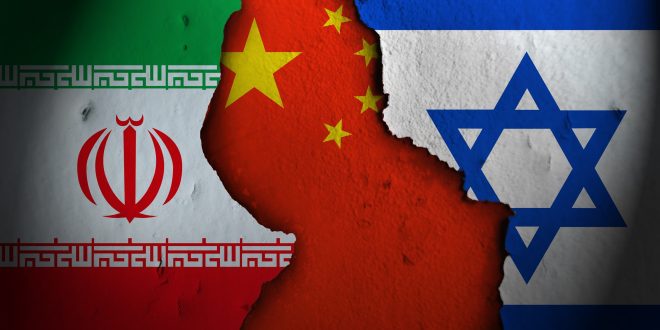
China’s evolving position on the Iran-Israel conflict reflects a pragmatic adjustment to align with its broader geopolitical and economic goals, particularly in light of Iran’s June 2025 parliamentary move to potentially close the Strait of Hormuz. Initially, Beijing backed Iran’s sovereignty, endorsing Tehran’s “self-defense” claims against Israeli strikes.[1] By October 2024, however, China shifted to a more cautious, neutral stance, advocating for restraint and prioritizing stability over military escalation. This change highlights Beijing’s careful balancing act: upholding its 2021 25-year strategic partnership with Iran while preserving strong ties with Gulf Arab states and securing critical global energy and trade routes.[2]
China’s wariness has grown due to Iran’s ongoing threats to block the Strait of Hormuz, a vital channel for over 20% of global oil flows. Such a closure would jeopardize China’s energy security and trigger severe global economic fallout. In response, Beijing has bolstered its oil stockpiles, sought alternative energy sources, and applied diplomatic pressure on Tehran to prevent escalation. As Iran’s top oil customer, purchasing nearly 20% of China’s crude imports, Beijing leverages its economic influence to ensure energy supply continuity.[3]
Simultaneously, China has participated in joint naval exercises with Iran and Russia in the Gulf of Oman, signaling a restrained display of strength. These drills aim to protect maritime trade routes and deter disruptions but are carefully calibrated to avoid direct conflict. Overall, China’s strategy reflects a pivot from ideological alignment with Iran toward a practical emphasis on regional stability, energy security, and the uninterrupted flow of global trade through a critical energy corridor.[4]
Some analysts argue that China may view the United States’ deeper involvement in the Middle East as a strategic advantage. A sustained U.S. focus on the Iran-Israel conflict could divert American military and diplomatic resources away from the Indo-Pacific, where China aims to expand its influence, particularly on issues like Taiwan and regional dominance.[5] If Washington becomes bogged down in another protracted Middle Eastern conflict, Beijing could gain room to advance its military modernization, deepen Eurasian integration, and expand global influence with reduced U.S. opposition. This view underscores how China’s approach to the Iran-Israel crisis is shaped not only by concerns for regional stability and energy security but also by its broader strategic competition with the United States.[6]
From Early Backing to Measured Diplomacy
Initially, China firmly supported Iran amid Israeli military actions. Chinese Foreign Minister Wang Yi labeled Israel’s strikes as “unacceptable” and a breach of international law, reaffirming Beijing’s commitment to Iranian sovereignty.[7] President Xi Jinping voiced these sentiments more explicitly than in previous Iran-Israel tensions. Through platforms like the Shanghai Cooperation Organization (SCO), where Iran gained membership with China’s support, Beijing condemned Israeli aggression. During this time, over 90% of Iran’s oil exports continued to reach China, bolstering their strategic partnership and military cooperation.[8]
However, China refrained from offering Iran material or military support. Despite its strong rhetoric, Beijing consistently advocated for de-escalation and pressed the United States and other powers to help restore stability. It minimized concerns about Iran’s nuclear program, describing it as peaceful, and called on Israel to cease military operations. Nonetheless, China’s involvement was confined to diplomatic statements and international critique, reflecting a cautious, interest-driven strategy that balanced its broader geopolitical ambitions with measured, principled support for Iran.[9]
Transition to Measured Diplomacy and Mediation Efforts
China took a more calculated and certain diplomatic stance as the Iran-Israel dispute intensified, presenting itself as a possible mediator. In bilateral discussions with Israeli and Iranian officials, Foreign Minister Wang Yi stressed opposition to violence and reiterated Beijing’s willingness to play a “constructive role” in reducing tensions. Beijing’s position is consistent with the Global Security Initiative’s tenets, which include dialogue-based conflict resolution, South-South cooperation, and comprehensive peace.[10]
This approach builds on China’s 2023 mediation success between Iran and Saudi Arabia, boosting its reputation as a conflict mediator. A major worry is preventing wider regional instability, especially given Tehran’s repeated threats to close the Strait of Hormuz—a critical maritime route for China’s energy supply. About half of China’s oil imports flow through this chokepoint, making its security vital for both China’s economy and global energy markets. Consequently, Beijing’s push for restraint stems from both practical needs and geopolitical strategy.[11]
Balancing Support and Restraint
China’s diplomatic strategy focuses on maintaining regional stability to safeguard key economic interests, particularly energy security and smooth trade routes. While emphasizing sovereignty and multilateralism, Beijing actively encourages de-escalation and conflict prevention. It has refrained from providing military support to Iran or harshly criticizing Israel in politicized terms. Instead, it employs economic diplomacy, symbolic naval drills, and mediation rhetoric, reflecting a cautious strategic approach.[12]
While Beijing criticizes Israeli strikes and sustains ties with Iran, it treads cautiously to avoid antagonizing the United States or Israel, a vital partner in fields like clean energy and high-tech. China recognizes that stronger support for Tehran could risk regional alliances and its global reputation. Therefore, it steers clear of provocative rhetoric or military involvement, aiming to grow its regional influence without sparking destabilizing consequences. This approach enables China to assert moral authority while advancing its long-term strategic goals.[13]
Protecting Near-Term Economic and Energy Interests
The safety of its energy imports and investments made through the Belt and Road Initiative (BRI) continues to be China’s top priority. One of the key components of China’s global energy strategy is the Gulf, particularly the Strait of Hormuz.[14] China’s oil supplies and wider commercial flows might be significantly impacted by any disruption, especially if Iran continues to threaten to seal the strait. The China-Pakistan Economic Corridor (CPEC) is one example of an overland commerce corridor that is at risk of vulnerability if regional tensions rise or if Israel retaliates against Pakistan for allegedly supporting Iran.[15]
Beijing has repeatedly advocated for a ceasefire, urging restraint from both Iran and Israel, while condemning U.S. military actions in Iran for escalating tensions. This two-pronged strategy—promoting diplomacy while opposing unilateral Western moves—highlights China’s focus on securing steady oil supplies and infrastructure stability. It also supports Beijing’s broader goal of positioning itself as a peace-oriented, rules-based power while prioritizing its essential economic interests.[16]
Managing Geopolitical and Strategic Stakes
China’s growing partnership with Iran is rooted in a long-term plan to expand its Middle East influence and counter U.S. dominance. Their 2021 25-year cooperation agreement covers infrastructure, military exchanges, and significant energy trade, with Iran acting as a key link in the BRI connecting China to Gulf markets. Beijing’s steadfast support for Iran’s sovereignty and its criticism of U.S. sanctions reflect its aim to shift regional dynamics in its favor.[17]
At the same time, China maintains robust commercial ties with Israel, its second-largest Middle Eastern trade partner, focusing on infrastructure, clean technology, and innovation critical to China’s growth. However, Beijing’s increasing support for Palestinian and Iranian causes has strained this relationship, leading Israeli officials to doubt China’s neutrality. The escalating regional crisis has made China’s balancing act more precarious.[18] To manage this, Beijing pursues active neutrality, condemning violence while steering clear of military involvement. Through platforms like the Shanghai Cooperation Organization (SCO) and diplomatic efforts, China shapes the narrative without overcommitting, allowing it to subtly expand its geopolitical influence.[19]
Strategic Calculations and Long-Term Outlook
While presenting itself as a proponent of peace, China sees the Iran-Israel conflict as an opportunity to expand its geopolitical influence. A prolonged crisis that diverts U.S. attention and resources could enable China to strengthen its presence in Eurasia and the Indo-Pacific. By deepening ties with Iran and other non-Western nations, Beijing aims to promote a post-Western regional order rooted in economic interdependence and diplomatic independence.[20]
China’s strategy toward Iran parallels its approach to the Russia-Ukraine conflict: prioritizing strong economic ties and strategic restraint over military involvement. This ensures the continuity of BRI investments, secures stable oil supplies, and bolsters China’s image as a responsible global power. However, this delicate balance is increasingly challenged. Tehran pushes for greater strategic support, while Israeli officials grow frustrated with China’s rhetoric. As tensions rise, Beijing may need to adjust its neutral stance to protect both its economic priorities and geopolitical goals.[21]
Broader Regional Instability
A destabilized Iran could significantly impact neighboring Pakistan, particularly in the volatile Balochistan province, where the Baloch insurgency views the CPEC as a form of “neocolonialism.” Iran’s internal turmoil could embolden insurgents, potentially providing logistical and ideological support across the porous border. This unrest risks drawing in extremist groups like Tehrik-i-Taliban Pakistan (TTP), fostering a complex insurgency that could destabilize Balochistan further and threaten Chinese infrastructure investments under the BRI.[22]
Central to these concerns is the strategic port of Gwadar, a cornerstone of CPEC and China’s BRI ambitions. Despite its importance, Gwadar remains underdeveloped, fueling local resentment due to minimal community benefits. If Iran’s turmoil amplifies regional instability, this discontent could escalate into rebellion, positioning CPEC as a symbol of foreign exploitation.[23]
Such unrest would jeopardize Gwadar’s role as China’s gateway to the Arabian Sea, undermining its value as an alternative to the Strait of Malacca—a critical maritime chokepoint vulnerable to U.S. naval influence and regional volatility. A collapse or prolonged disruption of CPEC would weaken the BRI’s credibility, eroding China’s soft power and global economic influence.[24] To mitigate these risks, Beijing may deepen security cooperation with Islamabad or pursue diplomatic mediation along the Iran-Pakistan border. However, such actions would challenge China’s non-intervention policy, potentially entangling Beijing in regional disputes and complicating its strategic objectives in South and Central Asia.[25]
China’s Calculated Distance from Iran
China exercises caution in openly backing Iran despite growing ties, driven by geopolitical, economic, and strategic considerations. Although cooperation in missile technology and oil trade has deepened, Beijing lacks the military capability to shift the regional power balance. Instead, it focuses on diplomacy and de-escalation, consistent with its goal of avoiding direct conflict with the United States and minimizing regional entanglement.[26]
Concerns over Iran’s nuclear ambitions further shape China’s approach. A nuclear-armed Iran could pursue greater autonomy, reduce Beijing’s influence and disrupt the regional balance, a sensitive issue given China’s own nuclear capability. While Beijing sees the conflict as an opportunity to exploit U.S. preoccupation, it carefully avoids actions that could escalate the crisis, safeguarding its broader geopolitical and economic interests.[27]
Evolution of China’s Stance
China’s Middle East strategy has undergone notable changes, particularly in managing ties with Israel and Iran. Prior to the 2025 Iran-Israel conflict, Beijing adeptly maintained robust diplomatic and economic relations across the region, engaging with Israel, Gulf states, and Iran to bolster energy security and advance the BRI. This balanced approach secured market access, infrastructure investments, and a neutral reputation, further strengthened by China’s 2023 mediation of the Saudi-Iranian reconciliation, which elevated its status as a constructive regional player.[28]
As the 2025 conflict intensified, China adjusted its stance while remaining restrained. While condemning Israeli strikes and U.S. support, Beijing has avoided direct military support for Iran, prioritizing diplomatic efforts to promote de-escalation and peace. This reflects its focus on maintaining regional stability essential for steady energy and trade flows. China’s cautious yet vocal diplomacy underscores its intent to navigate the volatile situation without triggering conflict with Western powers, especially the United States.[29]
Iran’s threats to close the Strait of Hormuz, a critical channel for China’s oil imports and global energy trade, have heightened Beijing’s concerns. A disruption here would threaten China’s energy security and global economic stability. In response, China adopts a prudent approach, emphasizing the protection of shipping routes while sustaining diplomatic and commercial relations with Iran.[30]
Iran-China Relations Post Iran-Israel War
Since the June 2025 onset of the Iran-Israel conflict, China has adopted a cautious diplomatic approach, consistently advocating for de-escalation and dialogue while firmly condemning Israeli strikes on Iran and supporting Tehran’s sovereignty. However, Beijing has refrained from military intervention or direct aid to Iran, aligning with its broader policy of non-intervention and risk aversion, even in regions critical to its economic interests.[31]
On 24 June 2025, U.S. President Donald Trump announced that China could continue purchasing Iranian oil despite U.S. sanctions and attacks on Iranian nuclear facilities, while encouraging Beijing to also buy “plenty” of American energy.[32] This pragmatic shift in U.S. policy, though subject to congressional and executive oversight, grants China greater flexibility to sustain its energy ties with Iran while expanding access to U.S. oil markets.[33]
Strategic Ambiguity Amid Heightened Pressure
The 2025 Israel-Iran crisis has significantly challenged China’s nuanced Middle East diplomacy. Beijing has historically balanced strong ties with both Tehran and Tel Aviv, but its early condemnation of Israeli strikes and vocal support for Iran’s sovereignty suggested a slight pro-Tehran lean. Shaped by its rivalry with Washington and alignment with anti-Western narratives, China’s rhetoric has been perceived as favoring Iran, despite its official stance of neutrality and non-intervention. Iran remains a vital energy supplier and BRI partner, underpinned by the 2021 25-year cooperation agreement covering oil and gas trade, defense collaboration, and infrastructure projects.[34]
However, the conflict threatens China’s interests, particularly the CPEC and energy security, which could be disrupted if Israeli actions escalate against Iran’s regional allies. Despite these risks, Beijing has opted for strategic ambiguity, avoiding military support or explicit security commitments to Iran. This restraint has bred mistrust in both Tehran, which seeks stronger backing, and Israel, where public and political sentiment views China’s stance as increasingly biased.[35]
U.S. President Trump’s remarks on allowing China to purchase Iranian oil, despite sanctions, reflect the complex geopolitical landscape Beijing navigates, with Washington’s flexible sanctions policy influenced by shifting energy markets and diplomatic channels. Looking ahead, China is likely to strengthen diplomatic ties with Iran while steering clear of military entanglement with the West, prioritizing energy security, infrastructure investments, and BRI goals. In this volatile region, China’s post-conflict Middle East strategy will depend on its ability to balance its commitments to Iran with its broader global ambitions, maintaining its role as a pragmatic power broker amid rising geopolitical tensions.[36]
Conclusion
From its early, unwavering support for Iran’s sovereignty and denunciation of Israeli military activities, China’s stance on the Iran-Israel conflict has changed to one that is more diplomatically calibrated and balanced. Beijing’s current strategy places a higher priority on mediation, de-escalation, and regional stability even as it maintains Iran’s right to self-defense. This change reflects China’s more fundamental strategic goals, which include preserving access to vital maritime chokepoints like the Strait of Hormuz, ensuring uninterrupted oil flows, and preserving international economic stability in the face of escalating geopolitical rivalry.
A wider shift in Chinese diplomacy from passive neutrality to a more active, albeit cautious, regional participation is also indicated by this recalibration. Beijing’s emphasis on crisis containment has been influenced by its growing strategic rivalry with the United States and its significant reliance on Gulf oil. China is steadfast in its resolve to keep the Strait of Hormuz from escalating, despite its outspoken support for Iran and condemnation of Israeli activities. China continues to rely on multilateral diplomacy and restrained language rather than direct engagement because of its limited ability to project military force in the region and its reluctance to risk entanglement.
China’s strategy combines economic prudence with diplomatic assertiveness. Beijing avoids direct military affiliation while retaining strong rhetorical support for Iranian sovereignty. Instead, it uses public calls for peace, infrastructural development, and limited political backing to further its aims. The goal of this strategic balancing act is to maintain regional stability, which is essential to China’s energy security, continuous trade, and larger international aspirations. Beijing’s reluctance reflects its wish to preserve adaptability in a very unstable situation, prevent a military confrontation, and safeguard trade relations throughout the Middle East.
However, there are significant obstacles due to wider regional instability. The China-Pakistan Economic Corridor, a key component of Beijing’s Belt and Road Initiative, could be threatened by Iran’s internal upheaval, which could spread to neighboring Pakistan and exacerbate Baloch insurgencies. China’s access to the Arabian Sea and overland trade with Central Asia may be jeopardized by disruptions in Balochistan, which would reduce China’s geopolitical clout in the area. Beijing would probably respond by stepping up diplomatic efforts and enacting specific security measures to protect its investments and infrastructure. China’s long-term Middle East strategy is still threatened by Iran’s internal instability and the possibility of regional contagion, though.
China’s commitment to long-term risk mitigation is demonstrated by its reliance on resilient infrastructure, such as extended energy corridors and overland pipelines. Its initial rhetorical support for Iran has developed into a more practical approach focused on regional stability, energy security, and diplomatic wrangling. This change is not merely reactionary; rather, it reflects China’s attempts to establish itself as a responsible international player that uses diplomacy rather than coercion to further its own objectives.
[1] Tommy Steiner, “China Is Recalculating Its Middle East Policy,” The Diplomat, November 14, 2024, https://thediplomat.com/2024/11/china-is-recalculating-its-middle-east-policy/.
[2] “Tell Houthis to Show Restraint: China Warns Iran as Ship Attacks Rise,” NDTV (from Reuters), January 26, 2024, https://www.ndtv.com/world-news/exclusive-china-presses-iran-to-rein-in-houthi-attacks-in-red-sea-sources-say-4933607.
[3] Callum Sutherland, “What Is the Strait of Hormuz and What Impact Could It Have on International Trade If Iran Closes It?” Time, June 23, 2025. https://time.com/7296861/strait-of-hormuz-function-iran-closure-threat-impact-trade/.
[4] “Iran, Russia, China to Hold Joint Military Exercises,” VOA News, March 9, 2025, https://www.voanews.com/a/china-iran-russia-to-hold-joint-naval-drills-in-middle-east/8008597.html.
[5] David Pierson, Keith Bradsher, and Berry Wang, “A U.S. Attack on Iran Would Show the Limits of China’s Power,” The New York Times, June 20, 2025, https://www.nytimes.com/2025/06/20/world/asia/us-iran-israel-china.html.
[6] Grace Mappes, Daniel Shats, and Karolina Hird, with Nicholas Carl, “Adversary Entente Task Force Update, June 18, 2025,” Institute for the Study of War, June 18, 2025, https://understandingwar.org/backgrounder/adversary-entente-task-force-update-june-18-2025.
[7] James Palmer, “China Backs Iran in Fight Against Israel,” Foreign Policy, June 17, 2025, https://foreignpolicy.com/2025/06/17/china-iran-israel-conflict-diplomacy-oil-trade-defense-weapons/.
[8] Craig Singleton, Jack Burnham, and Miles Kershner, “8 Things to Know About China’s Response to the Israel‑Iran Conflict,” Foundation for Defense of Democracies, June 20, 2025, https://www.fdd.org/analysis/2025/06/20/8-things-to-know-about-chinas-response-to-israel-iran-conflict/.
[9] Simone McCarthy, “China ‘Condemns’ Israel as It Looks to Show Itself as a Potential Peace Broker,” CNN, June 16, 2025, https://edition.cnn.com/2025/06/16/china/china-role-israel-iran-attack-intl-hnk.
[10] Nadia Helmy, “China’s Influence Grows in Middle East: Peace Efforts Between Israel and Iran,” Modern Diplomacy, June 19, 2025, https://moderndiplomacy.eu/2025/06/19/chinas-influence-grows-in-middle-east-peace-efforts-between-israel-and-iran/.
[11] Jianli Yang, “War in Iran: China’s Short- and Long-Term Strategic Calculations,” The Diplomat, June 24, 2025, https://thediplomat.com/2025/06/war-in-iran-chinas-short-and-long-term-strategic-calculations/.
[12] Miranda Jeyaretnam, “‘If Middle East Is Unstable, World Will Not Be at Peace’: How China Views the Israel-Iran War,” TIME, June 23, 2025, https://time.com/7296139/china-iran-israel-us-weapons-mediate-war-peace-oil-diplomacy/.
[13] Anniek Bao, “China’s Support for Tehran Grows More Restrained as U.S. Enters War Between Israel and Iran,” CNBC, June 2025. https://cnb.cx/44oXFpL.
[14] Adam Gallagher, “What’s at Stake for China in the Iran War?” United States Institute of Peace, June 23, 2025, https://www.usip.org/publications/2025/06/whats-stake-china-iran-war.
[15] “Assessing the Impact of the Israel–Iran Conflict on China’s Belt and Road Initiative,” SpecialEurasia, June 24, 2025, https://www.specialeurasia.com/2025/06/24/china-bri-israel-iran-conflict/.
[16] Jianli Yang, “War in Iran: China’s Short‑ and Long‑Term Strategic Calculations.”
[17] “Between Tehran and Tel Aviv: China’s Strategic Balancing Act in the Middle East,” Beyond The Horizon, June 18, 2025, Accessed June 24, 2025, https://behorizon.org/between-tehran-and-tel-aviv-chinas-strategic-balancing-act-in-the-middle-east/.
[18] Ibid.
[19] John Calabrese, “China’s Gulf Strategy Tested by the Israel–Iran Conflict,” Modern Diplomacy, June 23, 2025, https://moderndiplomacy.eu/2025/06/23/chinas-gulf-strategy-tested-by-the-israel-iran-conflict/.
[20] Simone McCarthy, “China ‘Condemns’ Israel as It Looks to Show Itself as a Potential Peace Broker.”
[21] “China’s Delicate Dance in the Iran–Israel War.” bne IntelliNews, June 17, 2025, https://www.intellinews.com/china-s-delicate-dance-in-the-iran-israel-war-386364/.
[22] Muhammad Rauhan Rasheed, “Securing CPEC: Addressing Threats and Grievances,” Pakistan Observer, February 6, 2025, https://pakobserver.net/securing-cpec-addressing-threats-and-grievances/.
[23] Irum Javid and Muhammad Ali, “Geopolitical Dynamics of the Pak–China Maritime Cooperation: A Blue Economy Perspective,” China Quarterly of International Strategic Studies 9, no. 1–4 (September 2024): 1–22, https://doi.org/10.1142/S2377740023500094.
[24] PK Singh, “China’s Strategic Gateway to the Indian Ocean,” Reconnecting Asia, CSIS, May 24, 2017, https://reconasia.csis.org/chinas-strategic-gateway-indian-ocean/.
[25] Jan Achakzai, “Iran’s ‘Shadowy’ Influence in Balochistan and Precarious Balancing Act for Pakistan,” The News International, January 22, 2024, https://www.thenews.com.pk/print/1150213-iran-s-shadowy-influence-in-balochistan-and-precarious-balancing-act-for-pakistan.
[26] Ailin Vilches Arguello, “Russia, China Maintain Cautious Diplomacy Amid Israel-Iran Conflict, Despite Deepening Ties With Tehran,” The Algemeiner, June 16, 2025, https://www.algemeiner.com/2025/06/16/russia-china-maintain-cautious-diplomacy-amid-israel-iran-conflict-despite-deepening-ties-tehran/.
[27] Ladislav Zemánek, “Where China Stands on the Israel–Iran Conflict,” RT World News, June 20, 2025, https://www.rt.com/news/620053-where-china-stands-on-conflict/.
[28] “China’s Delicate Dance in the Iran–Israel War.”
[29] Craig Singleton, Jack Burnham, and Miles Kershner, “8 Things to Know About China’s Response to the Israel–Iran Conflict.”
[30] Abhishek G Bhaya, “China Warns of ‘Nightmare Scenario’ if Iranian Government Forced to Collapse,” TRT Global, June 19, 2025, https://trt.global/world/article/553d30f129c2.
[31] “Beijing, a Longtime Friend of Tehran, Turns to Cautious Diplomacy in Iran’s War with Israel,” Arab News, accessed June 25, 2025, https://www.arabnews.com/node/2605715/middle-east.
[32] Timothy Gardner, “Trump Says China Can Buy Iranian Oil, but Urges It to Purchase U.S. Crude,” Reuters, June 24, 2025, https://www.reuters.com/business/energy/trump-says-china-can-continue-purchase-oil-iran-2025-06-24/.
[33] “White House Clarifies Trump’s Comment on China Buying Iranian Oil,” South China Morning Post, June 24, 2025, https://www.scmp.com/news/china/diplomacy/article/3315701/trump-voices-approval-chinas-oil-imports-iran-marking-us-shift.
[34] Cecilia Hult, “Trump Says China ‘Can Now Continue to Purchase Oil from Iran’—But He Hopes Beijing Will Buy U.S. Crude Instead,” Fortune, June 25, 2025, https://fortune.com/asia/2025/06/25/trump-iran-china-oil-us-crude/.
[35] “Between Tehran and Tel Aviv: China’s Strategic Balancing Act in the Middle East.”
[36] “Assessing the Impact of the Israel–Iran Conflict on China’s Belt and Road Initiative.”

![This handout image taken by the European Space Agency, captured by the Copernicus Sentinel-2 satellite, shows a view of Iran's Kharg island. [AFP]](https://uskenergy.com/wp-content/uploads/2026/03/Representational-Image-2026-03-14T174826.509-2026-03-cfb0244d80bdb96caafe790a619f1ef9-310x165.avif)