Summer nears, yet Iran’s power troubles run deeper than just hot days. Blackouts loom not simply due to weather but because neglect has weakened the grid over years. Outdated plants struggle now where new investment was ignored before. Fuel runs low at times, worsened when rivers shrink beneath long dry spells. People use energy without limits even as imports stall under trade barriers. In offices far from city lights, researchers calculate gaps – up to 13,640 megawatts missing during high stress, roughly a sixth of what users will ask for.
Electricity Supply barely creeps toward 68,420 megawatts while needs climb past 81,000. Heat presses down; machines fail more often; factories keep drawing juice anyway. Together, these strains overwhelm any buffer once built into the network.
Iran’s power usage hit a high of around 347 terawatt-hours in 2024. During the summer, the demand for electricity peaked at nearly 80,000 megawatts. On paper, the country has an installed capacity of over 100,000 megawatts, but the actual amount of electricity that can be produced is much lower. All these issues mean that the available supply of electricity is reduced, which is why Iran often has shortages, even though it seems like they have a lot of capacity.
Even though sanctions block overseas tech and loans, homegrown rules have made things worse too. Because the government pays so much toward energy costs, people see little reason to save it. Without enough income from small import taxes, power companies can’t fix old stations or improve lines that move electricity. Outdated machinery at plants burns extra fuel just to keep up.
Even small fuel shortages create big strain. Though Iran sits on huge gas deposits, broken systems slow how fast it can pull, clean, and send the resource to electricity stations. Reports show past conflicts damaged equipment so only about 600 million cubic meters emerge daily – now homes, factories, chemical makers, and energy sites all scramble when amounts dip below need. If shipments lag schedule, electric facilities either cut their work or switch to dirtier oil-based options.
Nowhere is the strain clear than in the energy system. Long reliant on flowing rivers, turbines now spin slower as rains fail year after year. About one in eight watts came from water before shortages took hold – figures from just a few years back show that much. Droughts have since drained entire basins, leaving cracked earth where lakes once were. In central storage points near the capital, volumes have dipped under fifteen out of every hundred units stored. Some gauges even showed less than ten.
Warmer weather pushes stress on supply and need at once. As things heat up, people want more cold air indoors, but nature pulls back – less rain falls, water vanishes faster into thin air. Years pass without proper wet seasons in Iran; wells run low, soil sinks, rivers fade – the system strains beyond repair.
Farming soaks up nearly all freshwater yet adds little value compared to its thirst.
Iran’s electricity network struggles due to low spending and shaky leadership. Foreign money and skills are scarce because of sanctions, yet local decisions still chase quick political wins instead of solid results. Cheap power prices stick around, rate changes drag behind, key resources get handed out based on loyalty, while too many dams take priority – each choice chipping away at future stability. Equipment wears down, plans stay thin, green energy crawls forward even though sunshine and wind could do much more here.
When fighting broke out in 2026, backup power systems in factories got hit along with vital grid parts, shrinking supply just as factory needs dipped for a moment.
Saving energy helps a little yet won’t solve Iran’s electricity problems. Instead of waiting years for new power stations, moving usage to off-peak times brings quicker results – according to researchers advising lawmakers. Just expanding supply would mean adding close to 8,000 megawatts, which is massive. Behind the scenes, old machinery drags down output; there isn’t enough fuel, too little water, poor funding, and pricing makes no sense. Asking people to use less might cut short-term strain, however long fixes need stronger grids, smarter gas turbines, more sun and wind power, changes in how fuels are handled, plus wiser handling of water resources.
Prolonged blackouts ripple through more than just homes. When lights go off, factories halt – steel mills slow, refineries sputter, mines idle. Output dips as machines stand still, expenses climb without steady power flow. Delays spread along delivery routes, halting materials mid-journey.
Farms feel the strain too. Pumps that draw water rely on current, yet dry seasons tighten their grip already. When cities lose power, extreme heat becomes harder to manage while electric-powered water networks sputter. Power shortages keep returning, making investors hesitant, pushing company expenses up, and stretching tight government funds further – especially where subsidy demands grow amid sanction impacts.
Power cuts set on a timer, days when officials leave offices earlier, pleas to use less electricity – these might help for now yet reveal how little has truly changed underneath. Every year as temperatures climb so do outages, scorching weather hits harder, taps run low, companies stumble, people grow restless. Demonstrations over tough living conditions and poor decisions prove broken systems often become political dangers fast.
Summer blackouts in 2026 aren’t predictions pulled from thin air. Hidden beneath them lie real breakdowns – power flickers, fuel stalls, taps run low, fields dry up, factories slow down, decisions stall.
Fixing this means weaving water, energy, and food plans together. Subsidy shifts must happen alongside precise efficiency drives.
Renewables need funding while grids demand modern parts. Power stations should work better. Gas routes require clarity. Water use calls for sharper thinking. If money keeps wavering and reforms stay unlinked, then lights dim further, crops suffer more, machines halt longer, lives shrink steadily.

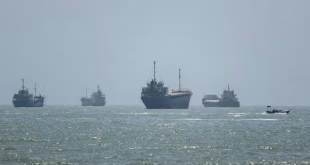
![Numerous merchant ships belonging to Iran and other countries remain at anchor in the Strait of Hormuz in Bandar Abbas, Iran, on September 10, 2026. [Fatemeh Bahrami – Anadolu Agency]](https://uskenergy.com/wp-content/uploads/2026/10/Hormuz-310x165.webp)