The surge, led by diesel shipments, rose to 81,000 barrels per day (b/d) in July and 41,800 b/d in August from zero in May and June.
Udit Bubna
24 September, 2026 08:30 am IST
New Delhi: India’s petroleum product exports to Turkey surged in July and August, as Ankara explored for alternative sources after severe cuts in Russian fuel supplies and disruptions in West Asia.
The surge, led by diesel shipments, rose to 81,000 barrels per day, or b/d, in July and 41,800 b/d in August from zero in May and June, according to Natalia Katona, an Abu Dhabi-based commodity analyst at Oilprice.com.
Though India exported limited volumes of diesel to Turkey in January (16,800 b/d), February (17,600 b/d) and April (8,400 b/d), shipments were absent in other months. Overall, exports of clean petroleum products, including diesel, petrol and jet fuel, rose to around 126,400 b/d in July and 137,200 b/d in August, after remaining negligible in the preceding months.
The surge highlights how disruptions in established oil trade routes are creating new markets for Indian refiners, allowing them to redirect cargoes to destinations offering attractive international prices and refining margins.
“Russia previously supplied more than two-thirds of Turkey’s clean product imports, so restrictions on that trade have created a substantial opportunity for alternative suppliers, including India,” Abhishek Kumar, a senior oil analyst at global energy and commodities consultancy Sparta Commodities, told ThePrint.
Russian restrictions drives Indian exports
Turkey’s dependence on Russian diesel made it vulnerable after Moscow restricted exports this summer. Russia supplied around 85 percent of Turkey’s diesel imports in 2025, equivalent to approximately 280,000 b/d, Katona said.
The restrictions were compounded by refinery disruptions caused by Ukrainian drone attacks and reduced fuel availability from West Asia amid the US-Iran conflict.
It then turned to alternative suppliers such as India and the US, with Saudi Arabia also supplying some cargoes depending on availability and delivered prices.
“The increase is concentrated in middle distillates, particularly diesel. It primarily reflects a change in Turkey’s sourcing mix as buyers replace Russian barrels,” Kumar said.
India, Katona told ThePrint, had previously not supplied diesel to Turkey in significant volumes because of the long voyage. However, the economics changed as Mediterranean diesel margins surged.
“The economics now justify it,” she said, pointing to the Mediterranean diesel crack spread, which recently reached a record $104 per barrel.
A crack spread represents the difference between the price of refined petroleum products and the cost of crude oil used to produce them. Higher margins incentivise refiners to send cargoes to distant markets, provided the returns cover transportation and other costs.
India also had more diesel available for export in August, with domestic consumption falling 13 percent month-on-month due to seasonal monsoon-related factors, Katona said.
Jamnagar leads export flows
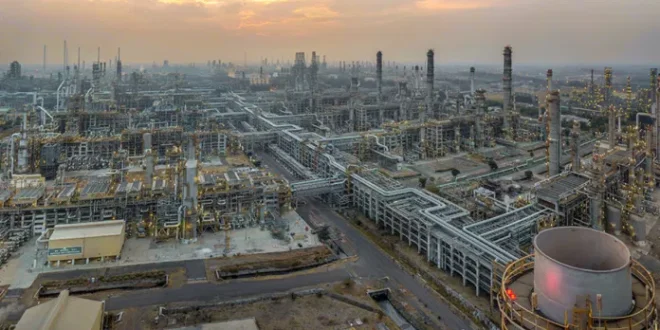
The increase was concentrated between two Indian exporters—Reliance Industries’ Jamnagar refinery and Nayara Energy’s Vadinar refinery—with the former accounting for around 70-85 percent of cargoes, according to Katona.
Jamnagar supplied gasoil (a type of diesel), diesel, gasoline (petrol) and jet fuel, while Vadinar’s shipments consisted only of diesel.
The trade continued into September. Nine vessels reached Turkey by 14 September, delivering gasoil, diesel, jet fuel, and gasoline, Katona said.
However, the September figures are not directly comparable with average export rates as the month is still underway.
According to Katona, all the shipments may not be destined for Turkish consumption. Some products could be redirected into Mediterranean and Black Sea markets, where refined fuel margins remain elevated.
Katona also pointed to indications that gasoline imported through Turkey’s Mersin terminal was subsequently exported to Russia. “India may, therefore, be trading gasoline with Russia through a Turkish hub, avoiding direct deliveries.”
Short-term opportunity, uncertain future
Another analyst Umud Shokri cautioned against interpreting the increase as a permanent shift in Turkey’s fuel sourcing.
“This appears to be primarily a short-term response to a supply shortage rather than a permanent change in Turkey’s trading patterns,” the US-based energy strategist and foreign policy advisor told ThePrint.
The developments, he said, also reflected Turkey’s broader effort to diversify its fuel suppliers. “Indian exports could remain high if Russian restrictions and regional disruptions continue, but volumes may fall once traditional supply routes recover.”
The main commercial risk for Indian refiners is the return of Russian diesel. If Moscow lifts its export restrictions and availability recovers, Russia’s geographical proximity to Turkey and competitive pricing could help it regain market share.
Logistics could pose another challenge, particularly if disruptions along the Red Sea and Suez route increase freight and insurance costs.
“The main logistical risk is disruption to the Red Sea and Suez route, which could increase freight and insurance costs, delay deliveries and weaken the competitiveness of Indian cargoes,” Kumar said.
For India, the exports to Turkey underline the flexibility of its refining industry, which can redirect fuel cargoes towards international markets when supply shortages and attractive margins create opportunities.
The rise in fuel trade comes at a time when India-Turkey ties are showing signs of cautious engagement after tensions over Ankara’s position during Operation Sindoor. The two countries resumed foreign office consultations in April following a four-year gap, indicating efforts to restore diplomatic dialogue.
But, whether the recent surge develops into a sustained trade route will depend on the duration of Russia’s export restrictions, the recovery of West Asia supplies and the competitiveness of Indian cargoes against suppliers closer to the Mediterranean.
(Edited by Tony Rai)